TPO Membrane
- Surface
- White, reflects summer sun
- Seams
- Hot-air welded into one sheet
- Rooftop Traffic
- Handles it with walkway pads
- Cold Weather
- Welds hold through freeze-thaw
- Best Match
- Warehouses and cooled retail space

As a Terre Haute TPO roofing contractor, we install white TPO membrane over new insulation on low-slope commercial roofs, with every seam hot-air welded and probed.
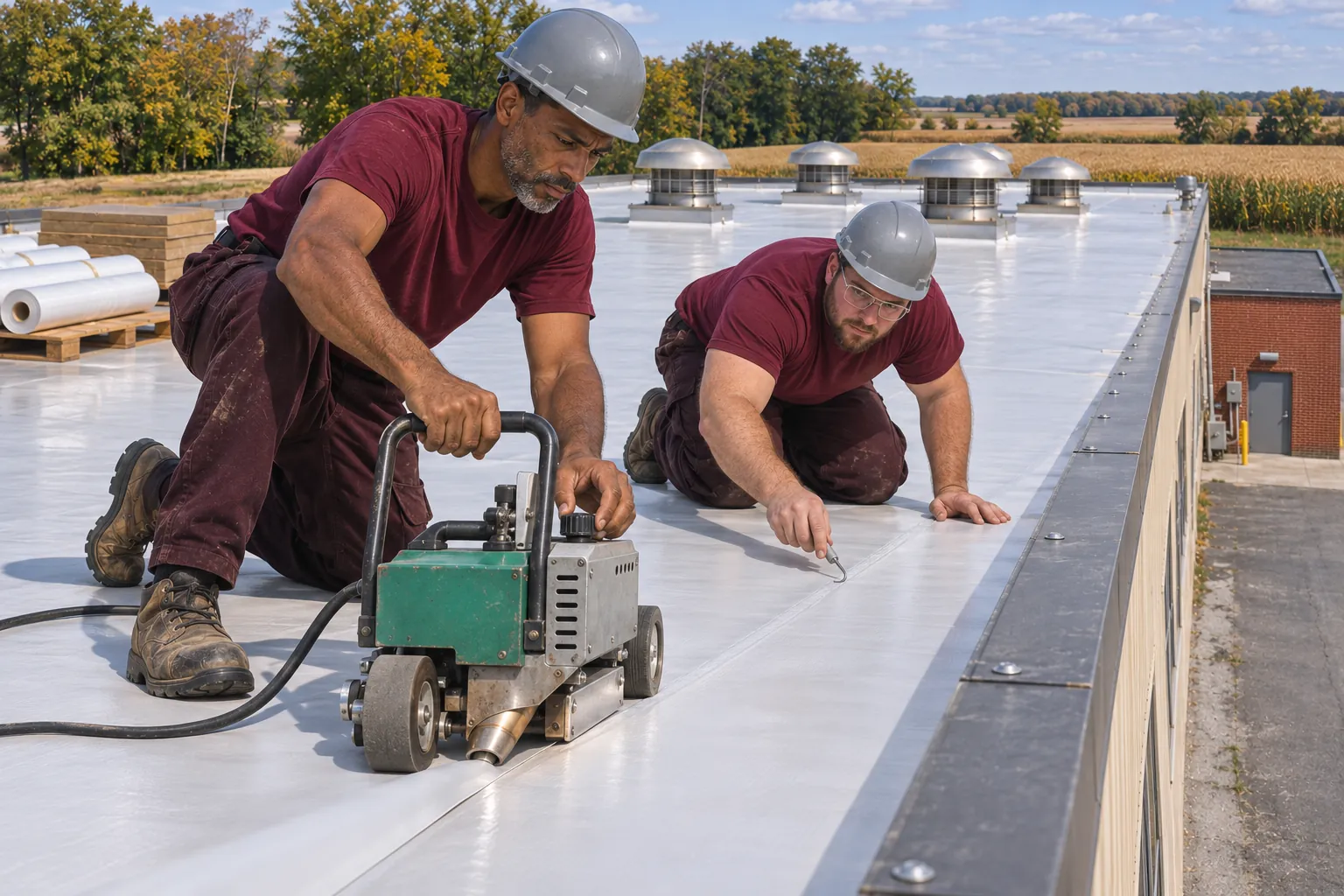
Terre Haute TPO roofing earns its place on wide, low-slope roofs with cooling loads below. Here is how it lines up against the two other systems owners ask about.
Four conditions lead most owners to a new TPO roof. Each one shows up on a roof walk long before the ceiling tiles give it away.
Older TPO sheets go brittle, and welds made at the wrong heat split along the edge. A probe catches the gaps, and once they run across the field, new membrane is the fix.
Drains set high or a deck that sagged under weight leaves water standing for days. Tapered insulation under the new sheet moves it toward the bowl.
Service techs walk the same line to every unit, and the white surface scuffs thin along it. New roofs get walkway pads welded down along those paths.
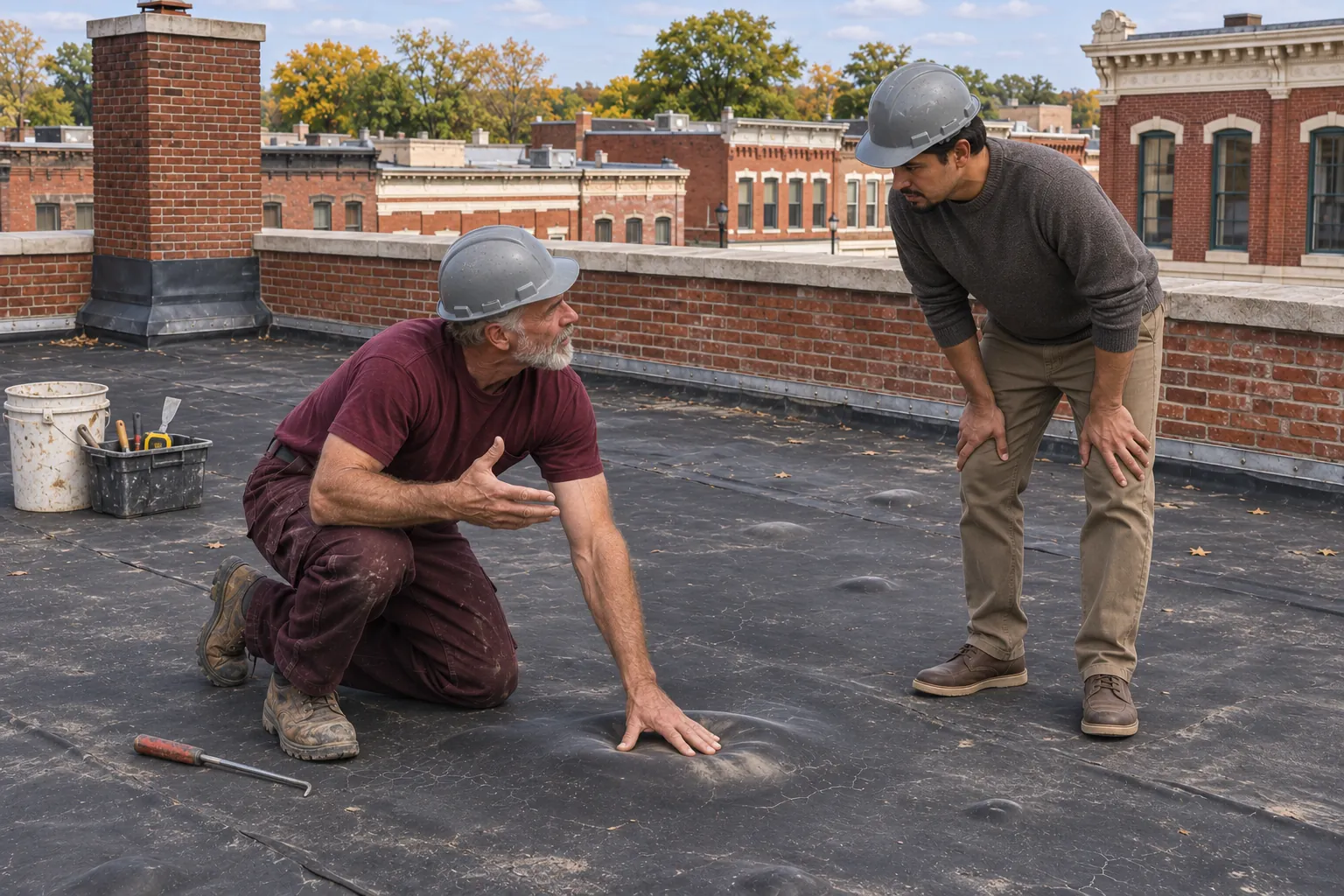
Spongy spots between drains mean water got under the membrane and soaked the boards. Cores mark the edges of the wet area before the tear-off plan is drawn.
A TPO roof is more than the white sheet. These four choices set how it is held down, how thick it is, and how it handles traffic.
Plates and screws hold the sheet edges to the deck, and the next sheet welds over them. It goes down fast on big steel-deck warehouses.
Bonding adhesive glues the membrane to cover board across the whole field. The surface stays smooth and quiet in wind, which suits roofs near open fields.
Thicker sheets carry more weathering layer over the scrim. We price the thickness against how long you plan to own the building.
Heat-welded pads mark the path to each unit, and prefabricated corners wrap every curb so the weakest details start out strong.
A white welded roof changes more than the view from above. Each person in the building feels it a different way.
Call and describe the wet spot inside. We check the welds and drain above it.
Call UsSend the address and roof size if you have it. Cores come before any number.
Get A Free EstimateFive steps carry a TPO roof from the first core cut to the final weld probe.
Cores show what sits under the old sheet, and every drain bowl gets measured so the tapered layout puts water where it can leave.
Sheet thickness, fastened or adhered, and the cover board all go into the written scope with the edge metal and curb details.
Loading docks, entrances, and fresh-air intakes under each section get dates, and adhesive work stays clear of open intakes.
Insulation goes down, sheets roll out, and a test weld each morning sets heat and speed before the seams are fused.
A seam probe runs every weld, and any gap gets rewelded on the spot. You get photos of curbs, drains, and edges.
Some buildings fit a different system better. These three cover the roofs where TPO falls short.
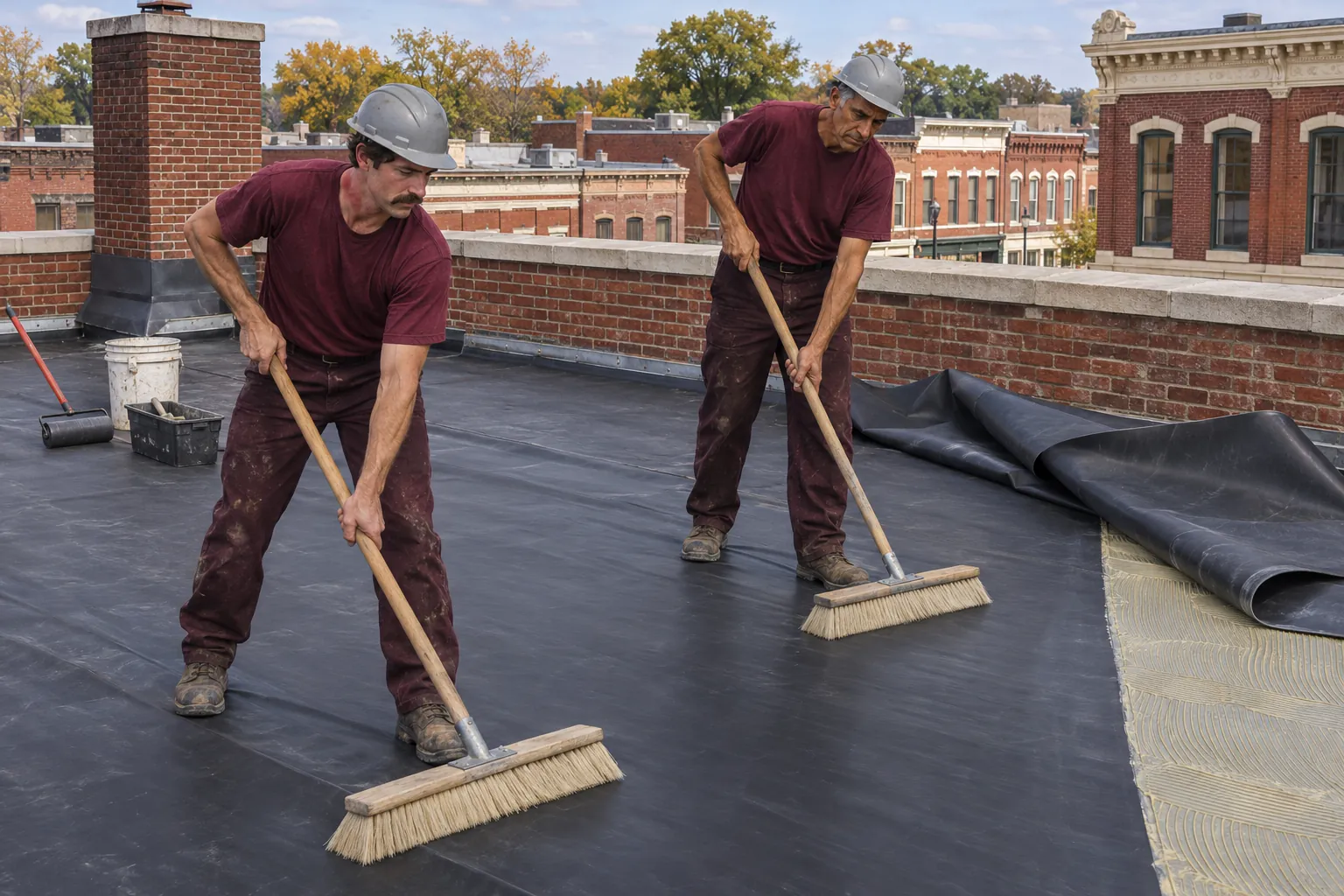 Taped Seams
Rubber sheets suit roofs with few penetrations and owners who want simple patches years from now.
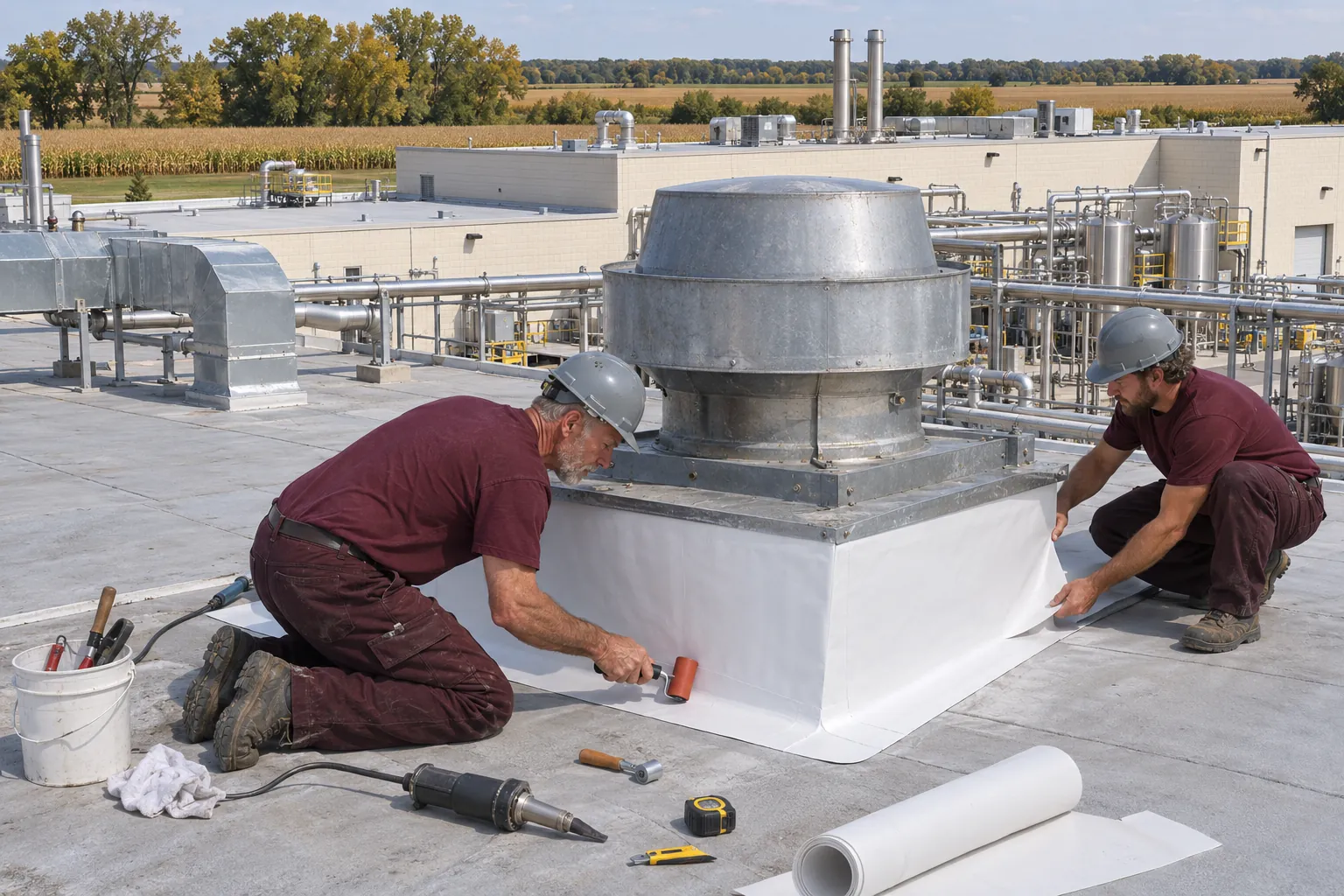 Flashed Curbs
Plant roofs with exhaust and heavy equipment need the system picked around what comes out of the stacks.
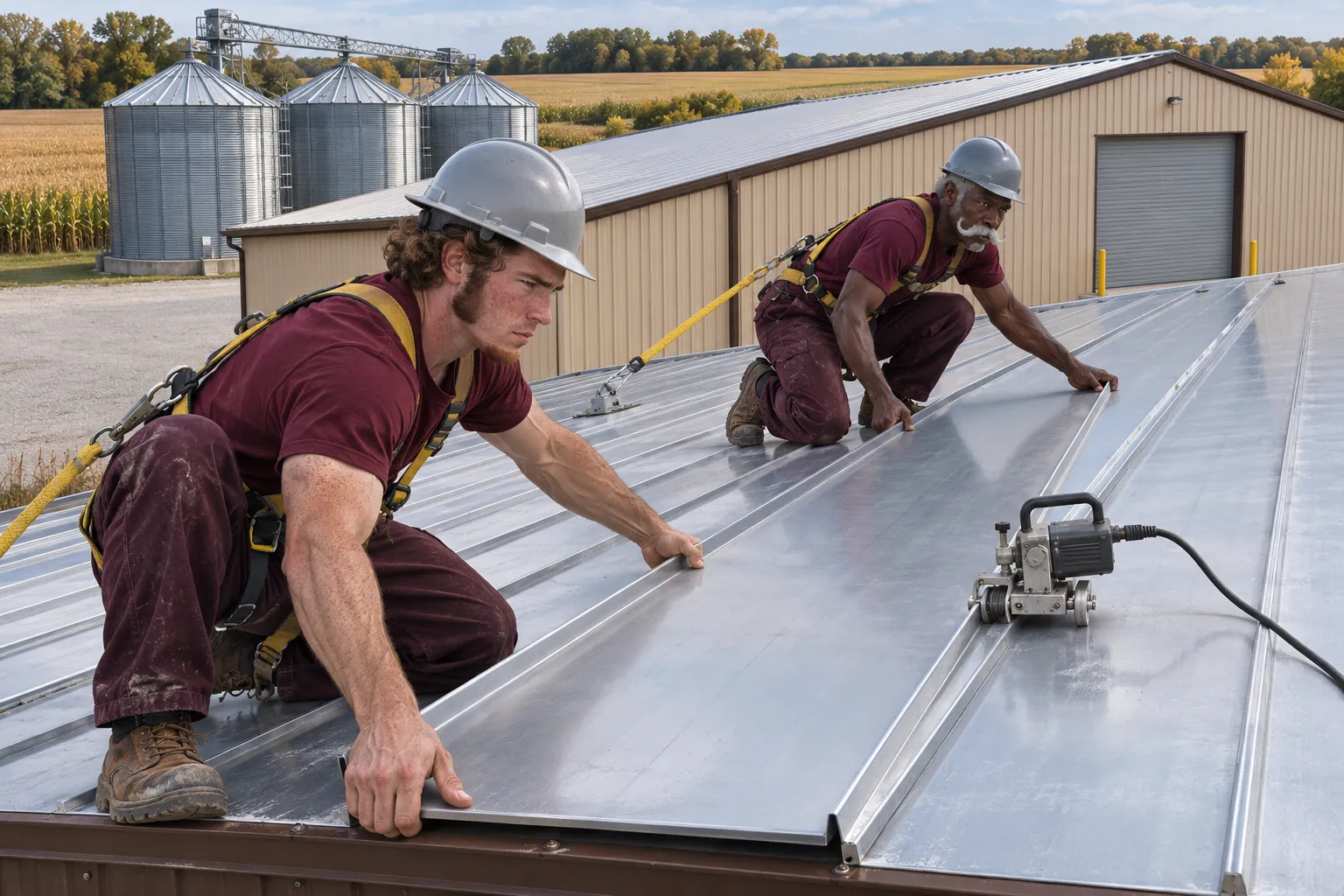 Standing Seams
Pitched shops and barns shed water better with standing-seam panels than with any membrane.
TPO is a single-ply plastic membrane, nearly always white, laid over insulation on flat and low-slope roofs.
Hot air fuses the overlapping edges into one continuous sheet. On a warehouse it is either fastened at the edges or glued across the field, and the white surface keeps summer heat off the space below.
Quality changes from maker to maker, and thinner sheets wear out sooner.
White surfaces show dirt and get slick with frost, and every weld depends on heat and speed set by the crew. Dropped tools and sharp debris also cut TPO more easily than thicker rubber.
On long warehouse runs with summer heat, welded TPO usually comes out ahead.
EPDM handles deep cold well and patches easily, and its repairs often cost less. TPO holds up better on traffic paths once walkway pads are welded down. Your drains and penetrations settle the choice.
A hot-air welder melts the overlapping edges of two sheets so they fuse into one.
Each morning starts with a test weld to set heat and speed for that day’s weather. Every finished seam is probed for gaps, and welds hold through freeze-thaw without relying on glue.
Spring and fall walks catch most problems early.
Clear the drains, check curb wraps and walkway pads, and look for punctures near units after service visits. A fresh weld fixes a small cut in minutes when it is found early.
Send the address and what the roof is doing. We cut cores and price a welded TPO roof that fits it.