Fully Adhered EPDM
- Held Down By
- Bonding adhesive across the field
- Surface
- Smooth black rubber
- Weight On Deck
- Light
- Leak Finding
- Easy, the sheet is visible
- Best Match
- Offices, schools, older flat roofs
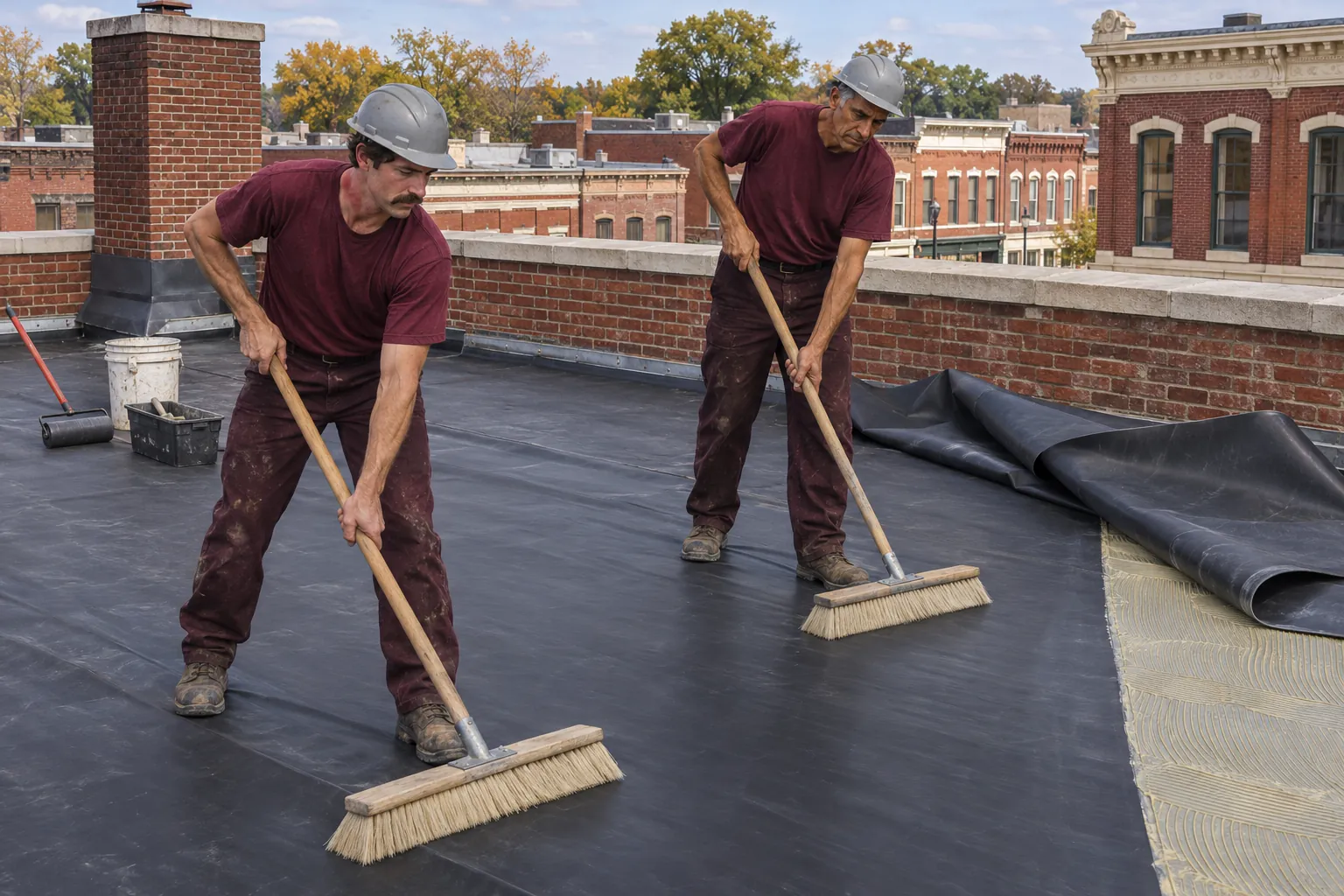
As a Terre Haute EPDM roofing contractor, we install black EPDM rubber on low-slope commercial roofs, glued down or ballasted, with new flashings at every wall and curb.
Terre Haute EPDM roofing fits flat roofs with few penetrations and owners who value easy patching. Here is how the two ways of holding it down compare with TPO.
Old rubber roofs fail in a handful of predictable places. Spotting which ones apply tells us whether to patch or replace.
Seam tape and old contact adhesive release at the corners first, then along the lap. Water follows the opening under the sheet and into the insulation.
Aging rubber pulls tight and bridges the corner where roof meets parapet. The flashing stretches until it tears or peels away from the wall.
Flashings around units and drain bowls give out well before the field sheet. Cracked pipe boots and lifted curb wraps are common finds.
Heavy boots, dropped screws, and blown branches puncture the sheet near service paths. Small holes stay hidden until a ceiling tile stains.
Four choices shape an EPDM roof: how it is held down, how the laps are made, what sits under it, and how the edges finish.
Glue bonds the rubber to a cover board over new insulation. The smooth sheet makes leaks easy to trace on a roof walk.
Stone holds a loose-laid sheet in place. It needs a deck rated for the weight and edges that keep stone from washing off.
Primed laps with factory seam tape replace the old liquid adhesive, and every lap gets cover strip at the T-joints.
Bars clamp the sheet to the wall above the flashing height, and new gravel stop or coping closes the perimeter.
A new rubber roof helps the people who own it, run it, and work under it in different ways.
Call and tell us where it drips. Laps and wall flashings above get checked first.
Call UsSend the address. Cores show whether the insulation can stay or must go.
Get A Free EstimateAn EPDM job follows the same five-row work order every time, from cores to the last strip of seam tape.
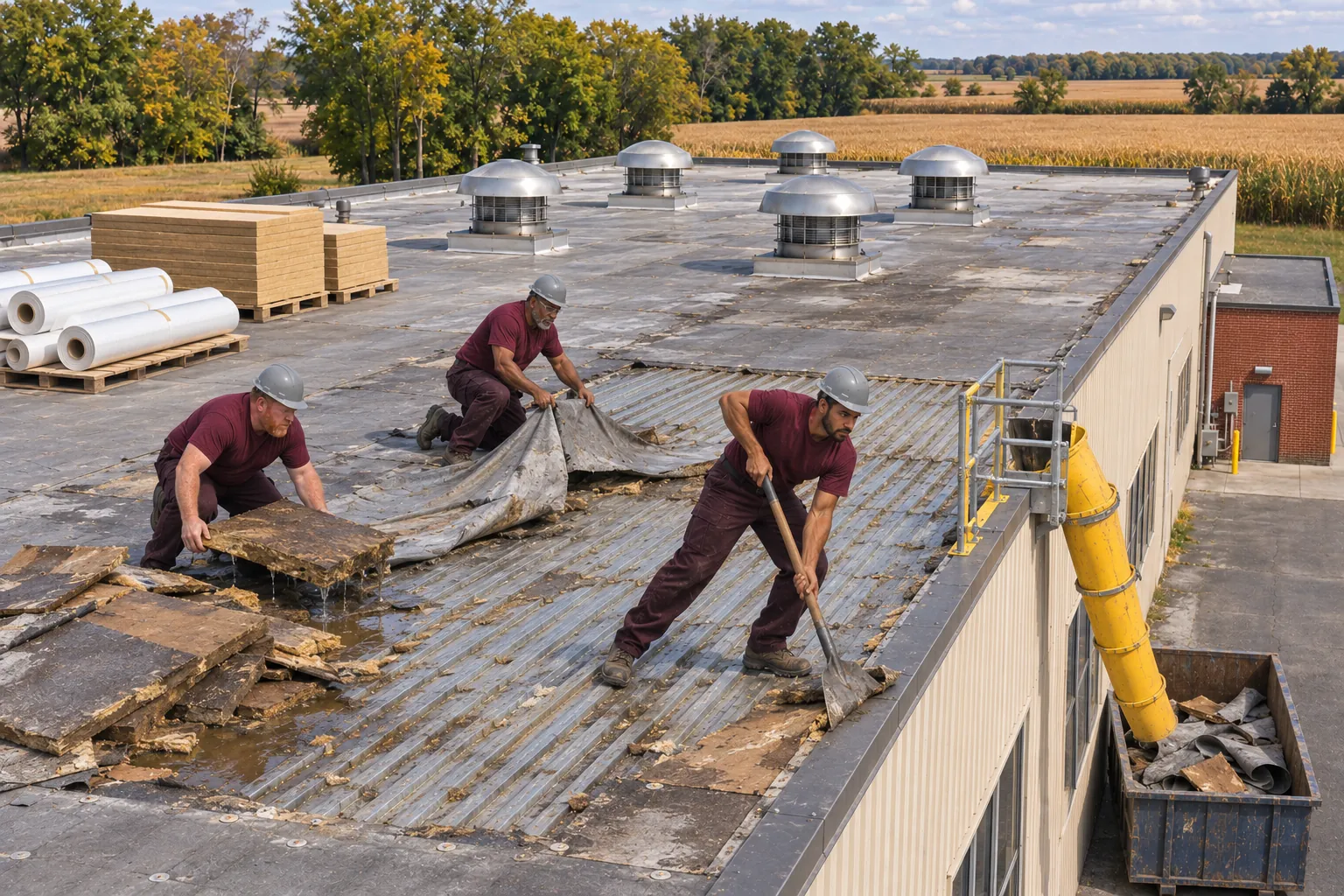
Cores at soft spots, drains, and walls show how much insulation is wet and whether ballast has crushed the boards below.
Deck capacity, wind exposure, and how often the roof gets walked decide how the sheet is held down. The scope records the choice.
Classrooms, offices, and records rooms under each section get dates, and fresh-air units are shut down while adhesive cures.
Wide sheets roll out with few seams, then laps are primed, taped, and rolled. Walls get new flashing up to the termination bar.
Every lap is checked by hand, T-joints get cover patches, and pipe boots are clamped. Photos of each detail go into your file.
EPDM covers many flat roofs in town. These three handle the ones it fits less well.
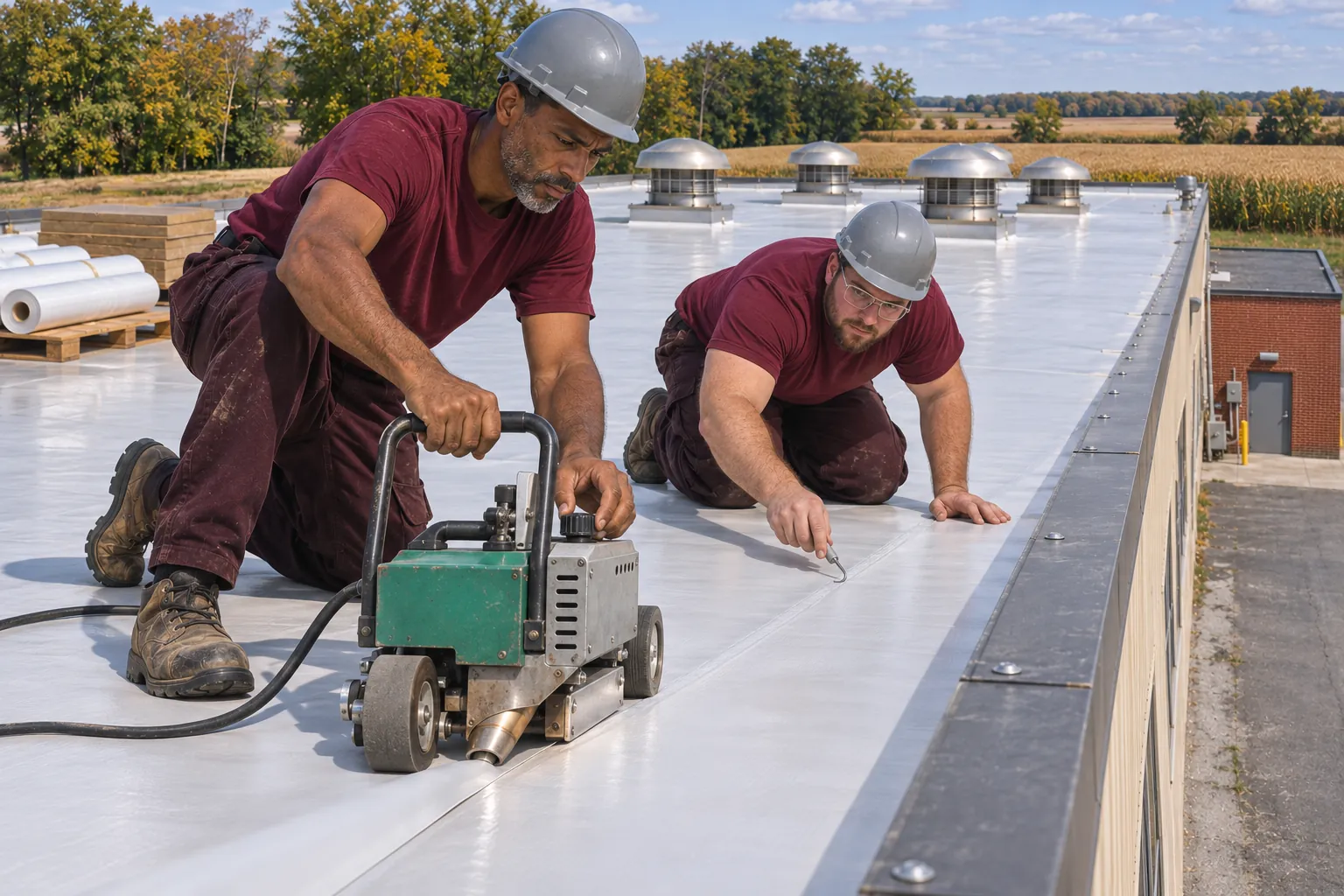 Welded Seams
Cooled warehouses and big retail roofs gain from a white welded sheet that reflects July sun.
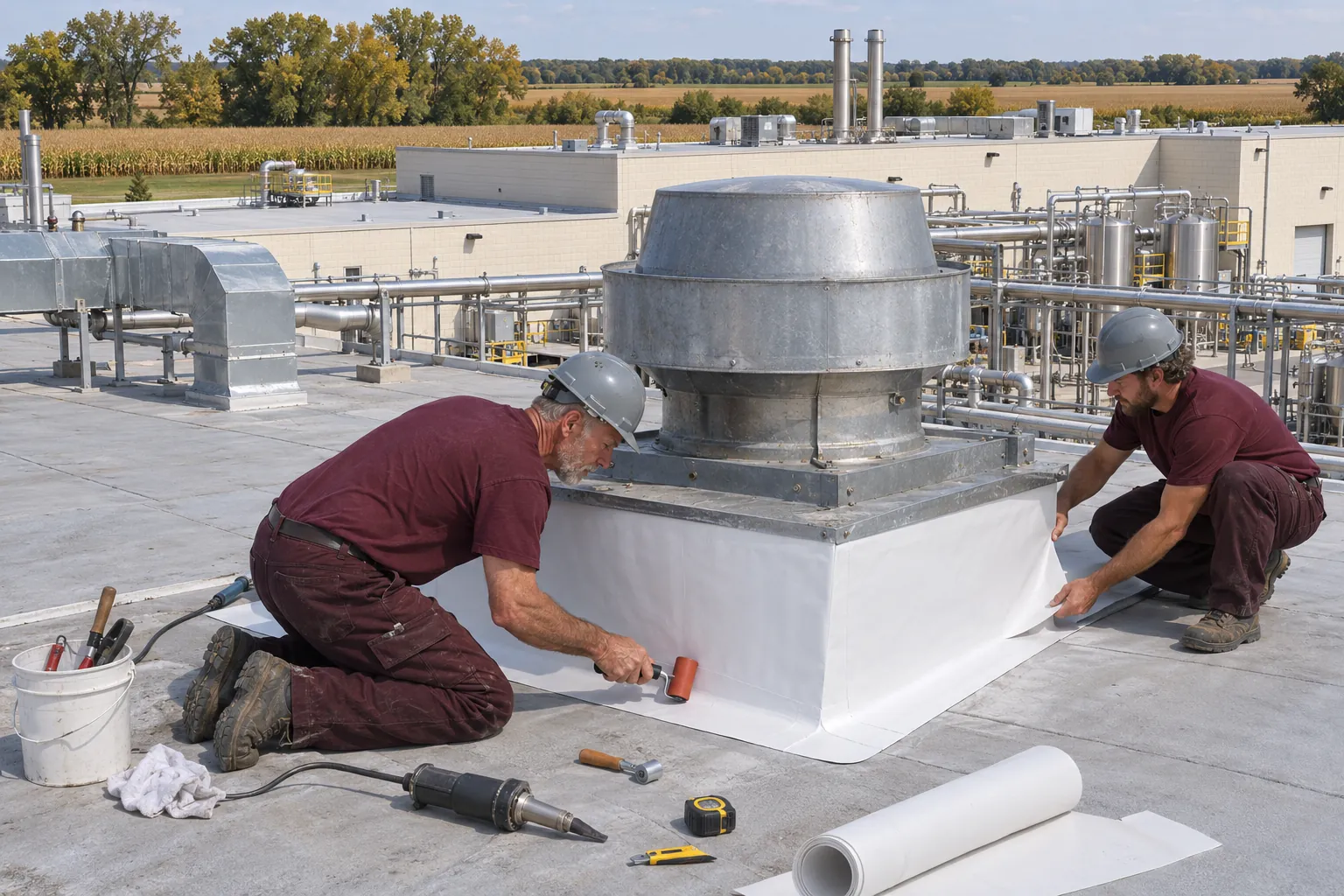 Flashed Curbs
Exhaust from plant stacks can soften rubber, so plant roofs get a system chosen around it.
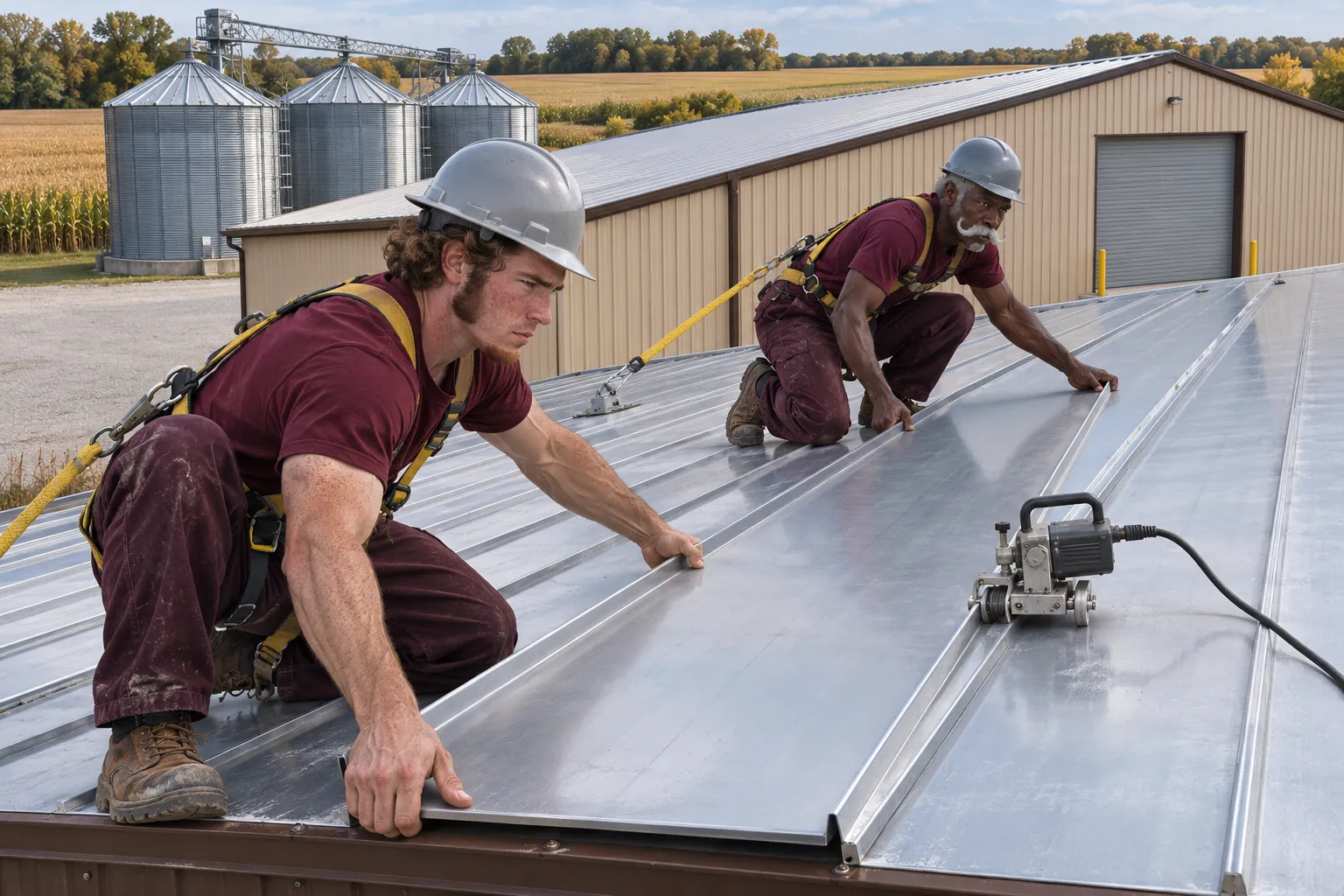 Standing Seams
Framed metal over a flat roof adds slope where drains never kept up with rain.
EPDM is a synthetic rubber membrane, usually black, for low-slope commercial roofs.
It ships in wide sheets, so a roof has few seams, and those laps are joined with tape or adhesive. Its flexibility in cold weather fits west central Indiana winters on offices, schools, and older flat roofs.
Laps letting go, shrinkage at corners and walls, and punctures top the list.
Curb and drain flashings usually fail before the field sheet does. Caught before water soaks the insulation, most of these get repaired rather than replaced.
Deck strength and wind exposure decide it.
Adhered rubber is glued to the insulation, giving a smooth sheet that is easy to inspect. Ballast goes down faster, but the stone adds weight and hides leaks. A deck that cannot carry stone gets an adhered sheet.
Replace when laps fail all over the roof, the sheet has pulled off the walls, or cores find wet insulation across wide areas.
Replacement means tear-off, deck repair, new insulation, and new EPDM or another membrane with fresh flashings.
Walk it each spring and fall, and after big storms.
Look at the T-joints, pipe boots, and wall flashings, clear the drains, and pick up any screws left from unit service. Small punctures take a primed patch the same week you find them.
Tell us about the rubber roof you have now. We core it, check the laps, and price the right EPDM system.