Two Roofs Stacked Up There
An earlier owner covered an old roof instead of removing it. Cores find both, and the building office decides whether code allows one more.
As a Sullivan commercial roofing contractor, we install and replace roofs on Sullivan retail, metal, and municipal buildings, cutting cores first to count the old layers.
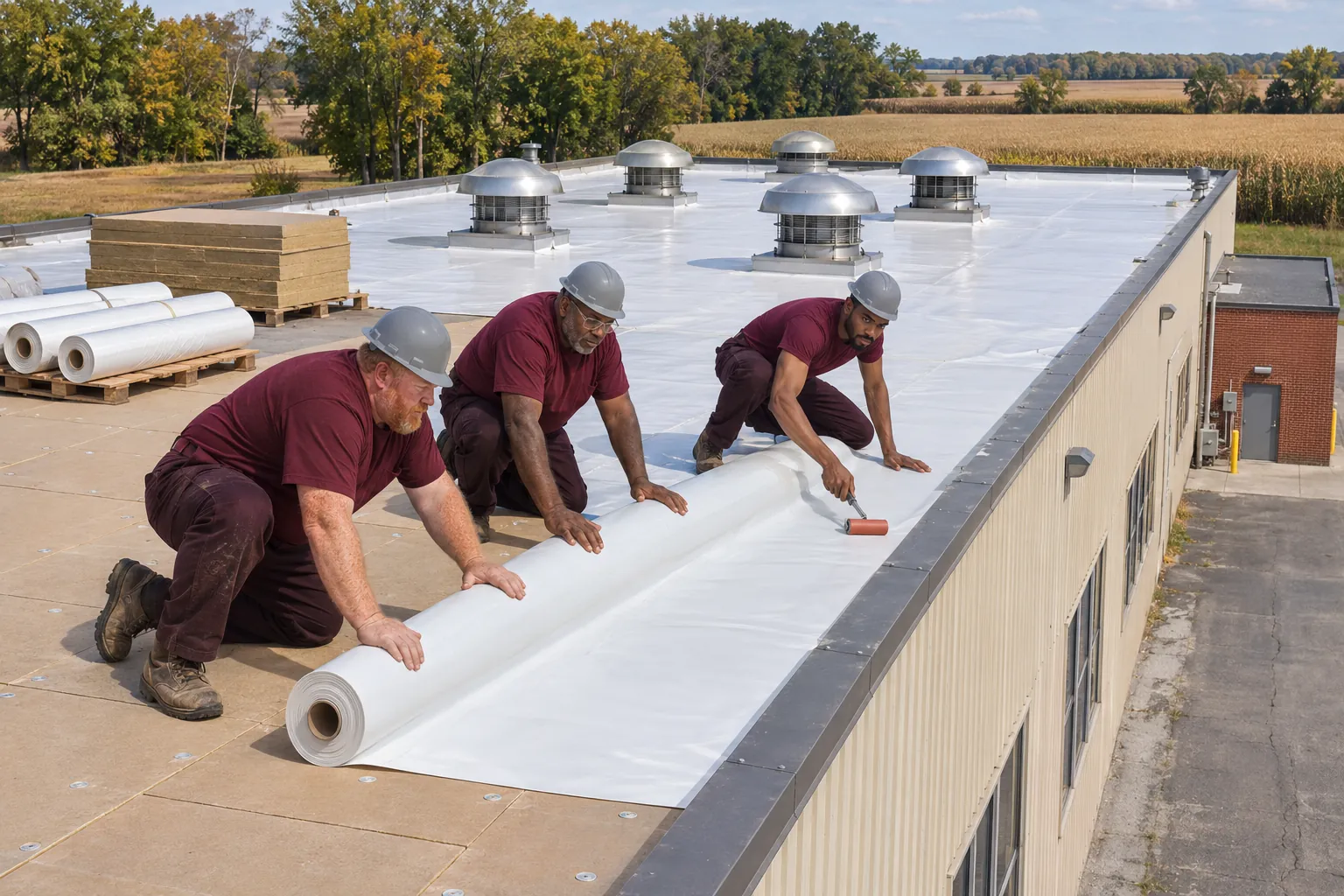
Sullivan commercial roofing decisions start below the surface. How many layers are up there decides whether a new roof can go over or the old ones come off.
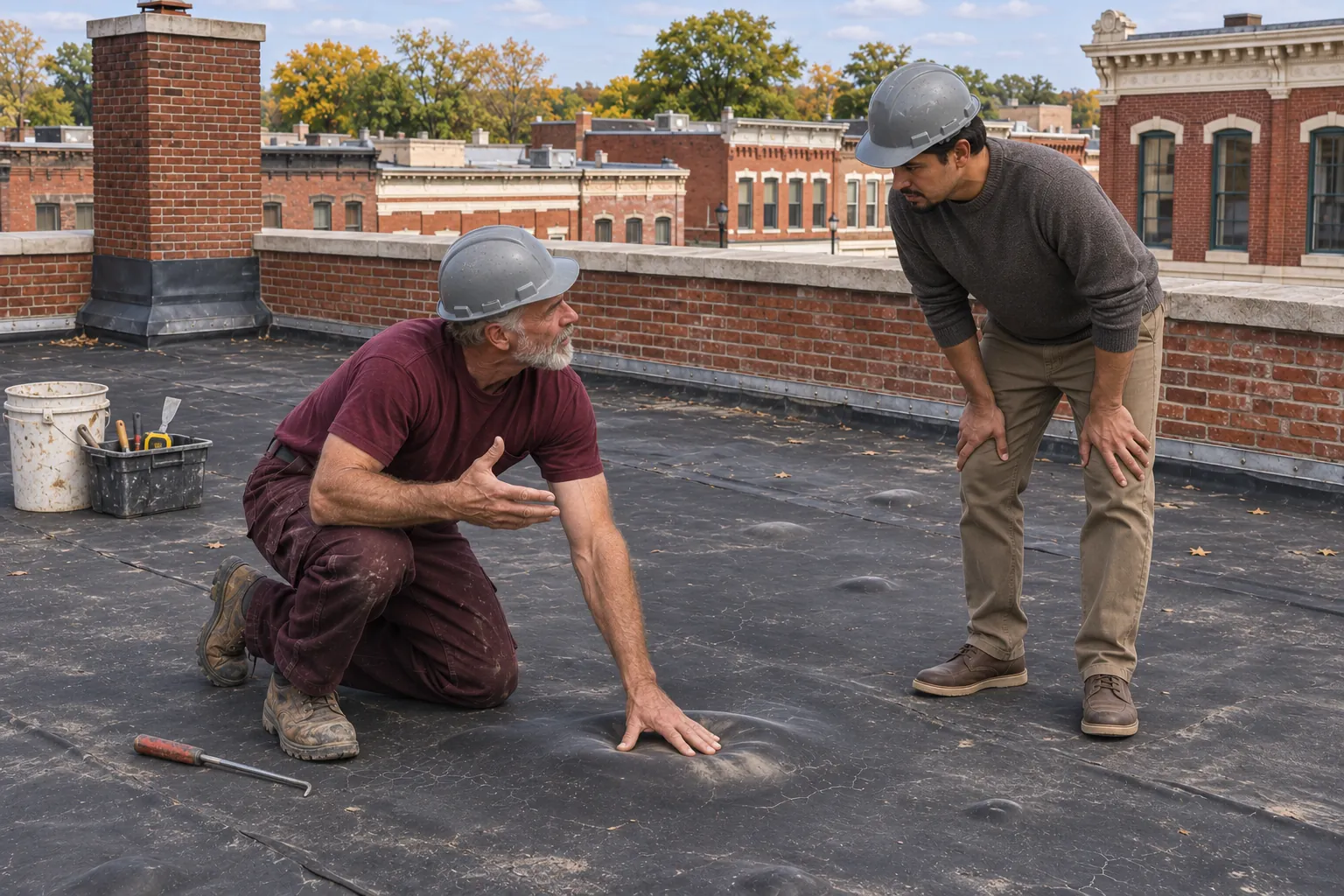
Older retail and municipal roofs often hide a second roof under the first, plus years of patches. Cores cut at the field, drains, and walls count them and show whether the insulation is dry.
One dry layer can carry a recover with new cover board. Several layers, or any wet boards, point to tear-off, and code limits how many layers a roof can carry.
Roofs with history hide problems under the surface. These four come up most often in Sullivan.
An earlier owner covered an old roof instead of removing it. Cores find both, and the building office decides whether code allows one more.
A sheet that looks fine can sit over soaked insulation from an old leak, adding weight to the deck.
Repairs in tar, tape, and coating overlap on the same seam, and none of them bond well to the others.
Municipal and retail buildings stay open during work, so noise, entrances, and parking need planning.
Knowing what sits under the roof helps every person tied to the building.
Every card notes how that system goes on over, or after, the old layers.
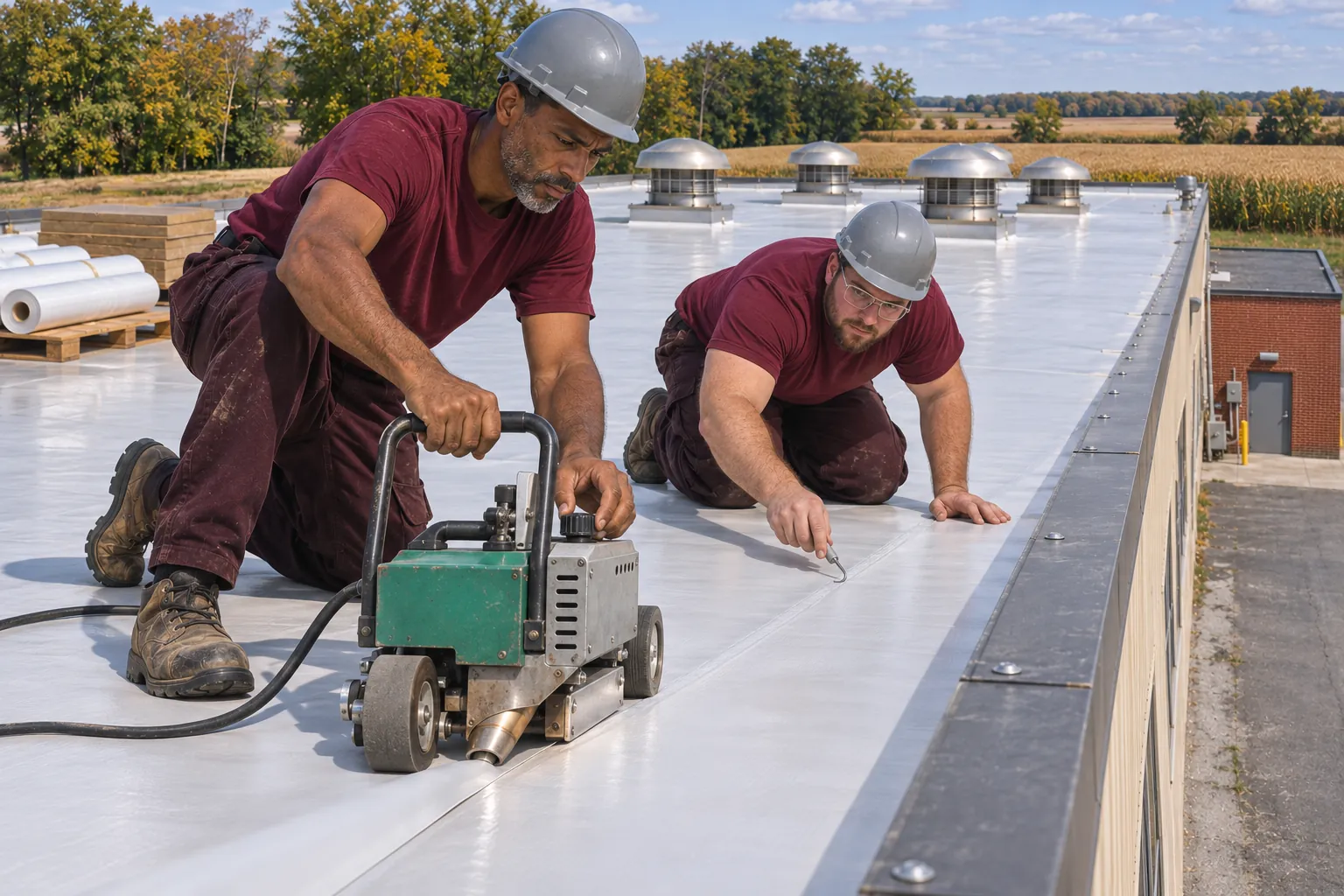 Welded Seams
Welded TPO goes over one dry layer with new cover board, or onto new insulation after a full tear-off.
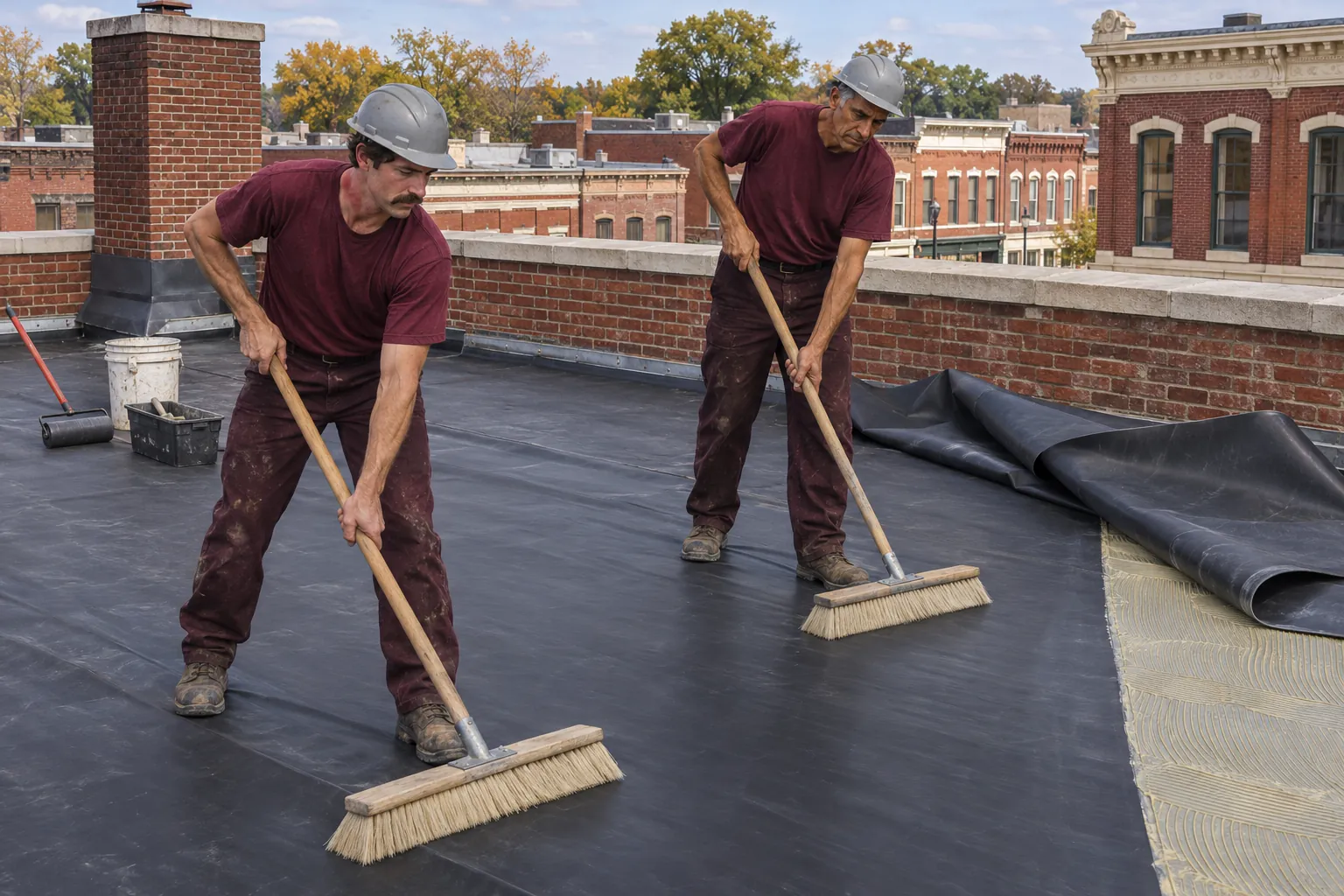 Taped Seams
Adhered rubber works on retail and municipal roofs once cores confirm the boards below are dry.
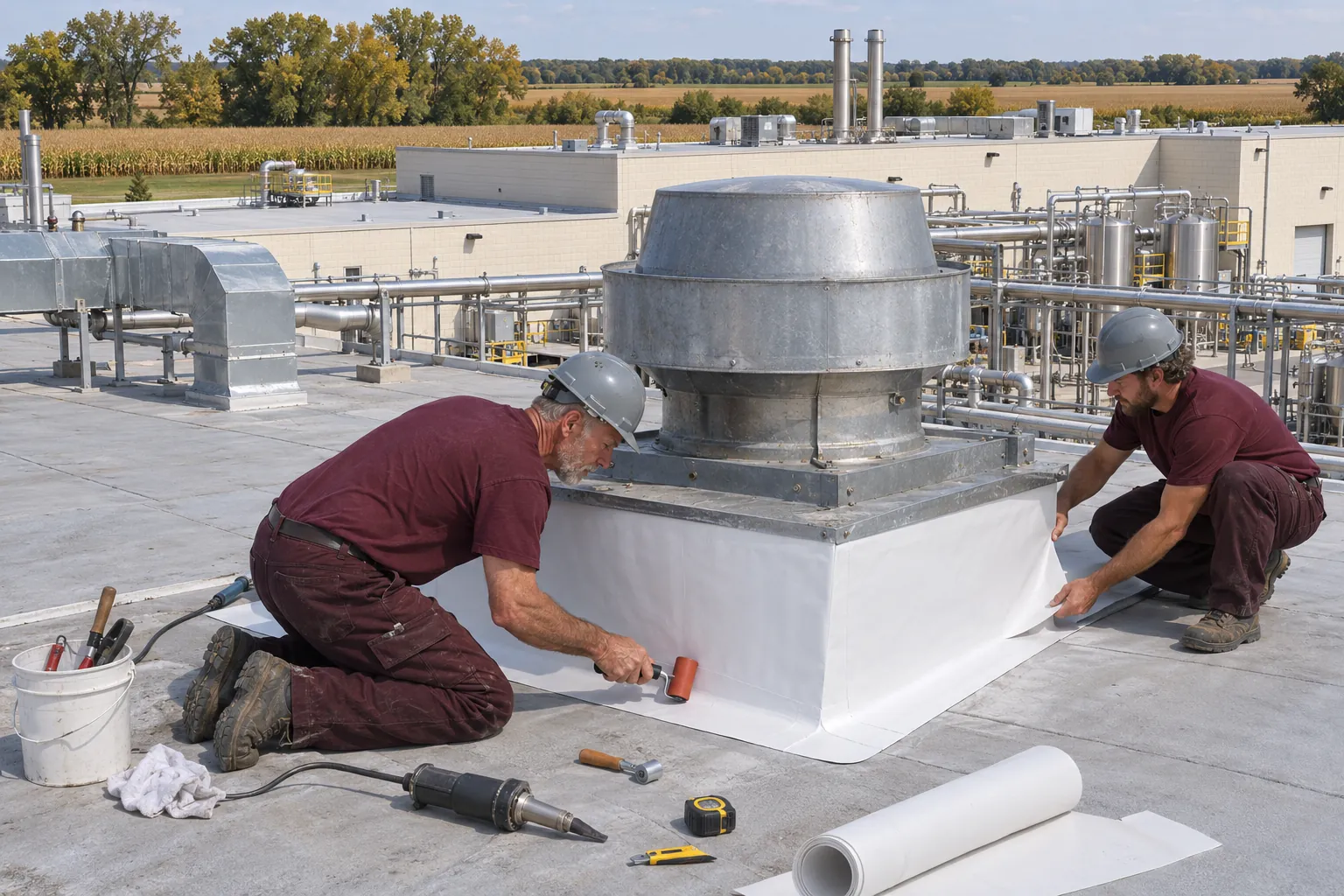 Flashed Curbs
Shops and plants with units get curbs raised to match the new roof height after recover or tear-off.
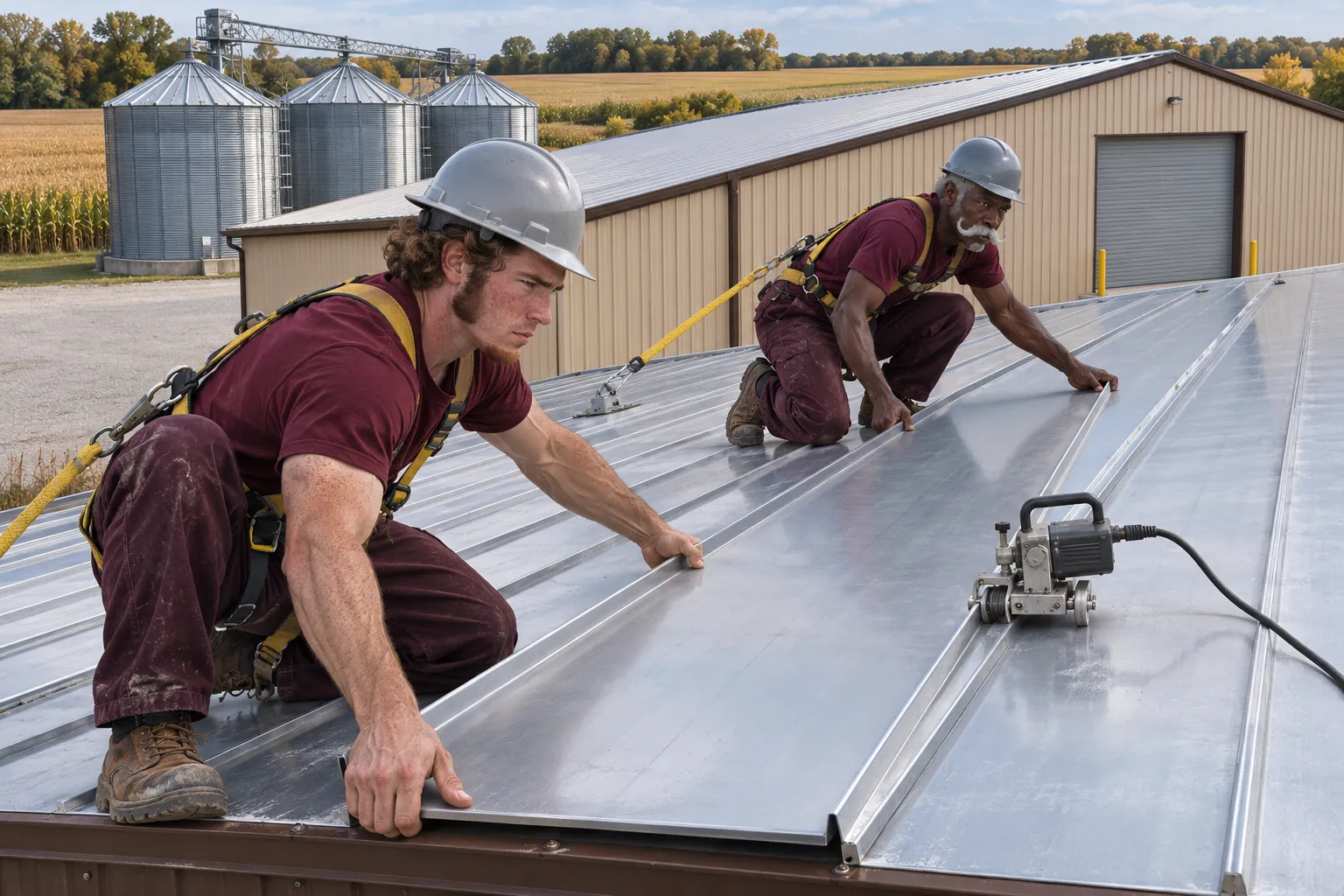 Standing Seams
Metal shops get panels replaced or framed over, with the old layers counted first.
Four rows on the work order take a Sullivan roof from cores to closeout.
Cores cut at the field, drains, and walls count every layer and show where insulation is wet.
The layer count and moisture readings decide the path, and the scope records both.
The county or town office for the building is confirmed and the filing made before work starts.
Core photos and the layer count go to you in writing, so a board or the next owner can see why the path was chosen.
Old layers come off where needed, the new system goes down, and each section closes before dark.
Sullivan sits with five other places where we install and replace commercial roofs.
Outside these towns? Call us or send us a message.
Home base: plants, warehouses, offices, and downtown blocks.
Seasonal work windows and nightly tie-ins on Clay County roofs.
Shops and storage buildings sharing one long roof.
Metal buildings joined to low-slope plant roofs.
Big warehouse roofs replaced around dock schedules.
Small retail buildings, metal shops, and municipal buildings in Sullivan are all work we take.
Buildings outside the towns we list can call or send a message, and we will say whether we can reach them.
Buildings outside Terre Haute city limits go through their own county or town building office.
Inside Terre Haute, the city Building Inspection Division confirms required permits are purchased. We confirm the right office and filing for each job before work starts.
Whether the old layers stay or go makes the biggest difference.
A recover over one dry layer skips most of the tear-off, while two layers or wet boards add removal and deck repair. Size, system, and curbs add the rest.
Call with the building address.
We set a roof walk with core cuts, then tell you whether the roof can take a recover or needs a tear-off.
Municipal and other public buildings get work planned around open hours, entrances, and parking.
Boards and managers get the layer count and core photos in writing to back the decision.
Code sets a limit on roof layers, and the local building office applies it.
We count the layers with cores and confirm the limit with that office before choosing recover or tear-off, so nothing goes on that has to come off later.
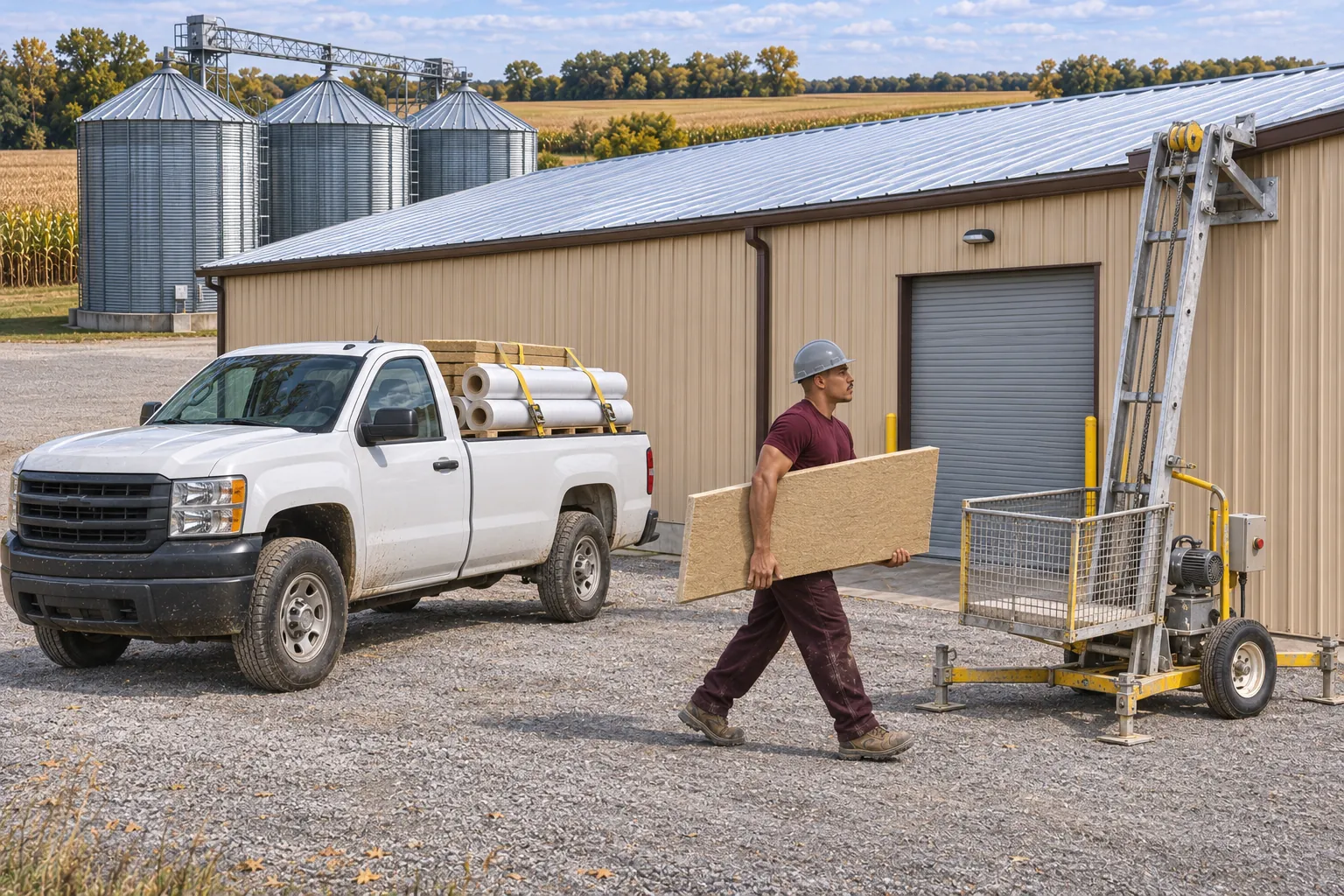
Send the address and what you know about the old roof. Cores will tell us the rest.