Leaks Showing Up Next Door
Water enters over one bay and runs along the deck before it drips, so the stain appears in a different shop from the opening.

As a Linton commercial roofing contractor, we replace roofs on shops, offices, and storage buildings in Linton, working bay by bay so every business below stays open.
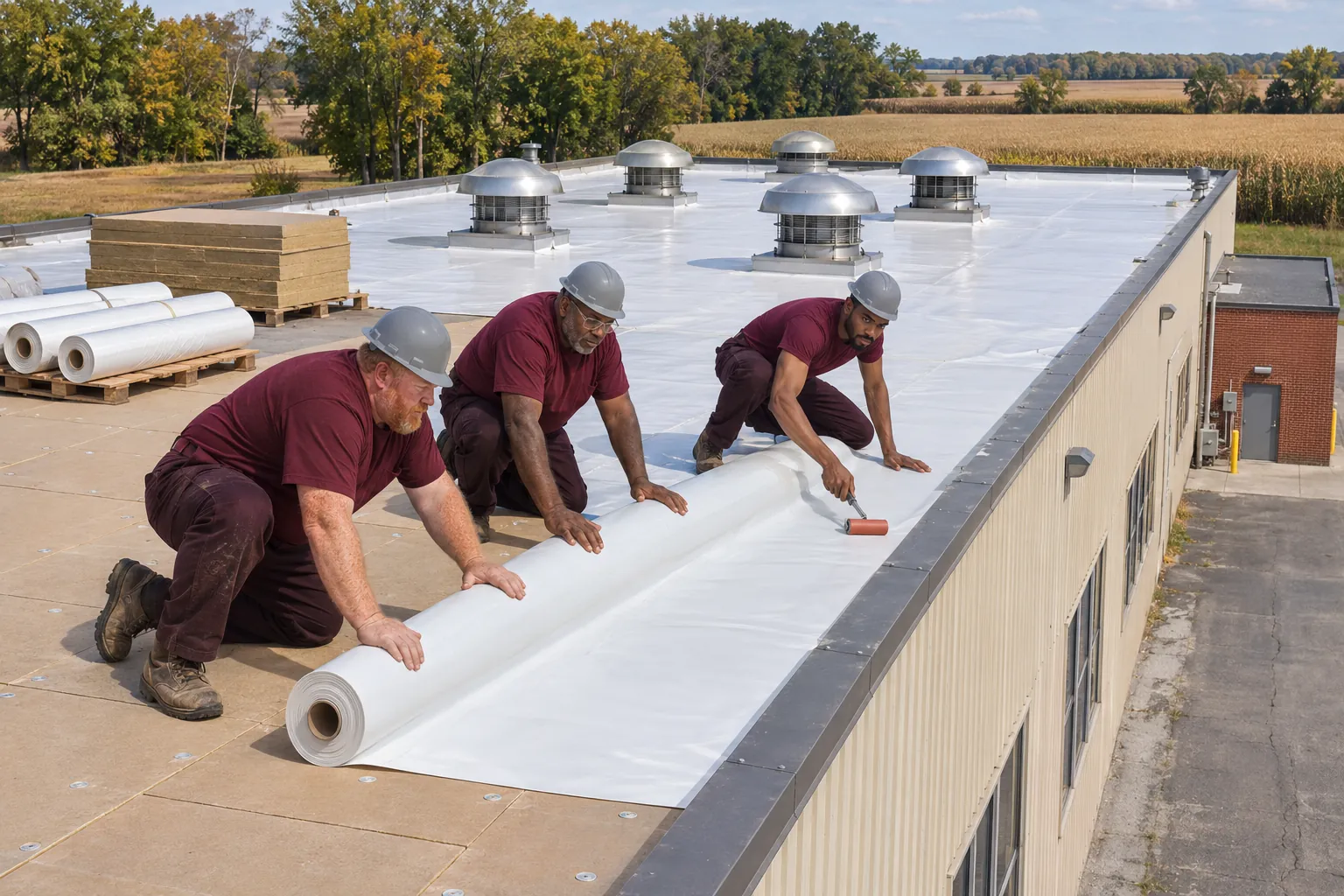
Linton commercial roofing work often means one long roof over several businesses. Each bay below gets its own dates, so no tenant is surprised.

Storefront rows and storage buildings in town often run one membrane or one set of panels across several tenants. A leak over one shop can start at a drain over the next one.
We map each bay, tell every tenant when work sits above them, and keep the dumpster and lift off their doors. Drainage and old layers are checked across the whole roof first.
Shared roofs fail in shared ways. These four turn up on most Linton storefront and storage roofs.
Water enters over one bay and runs along the deck before it drips, so the stain appears in a different shop from the opening.
Low walls dividing tenants collect water on both sides, and their caps and base flashings crack long before the field sheet.
Years of separate repairs by separate tenants leave mismatched materials over the same seam. Cores show what is under them.
Black roofs over storage rooms take full summer sun and age faster. White TPO is an option where the space below is cooled.
On a shared roof, owners, managers, and every tenant below gain something different.
Each card notes how that system handles a roof shared by several businesses.
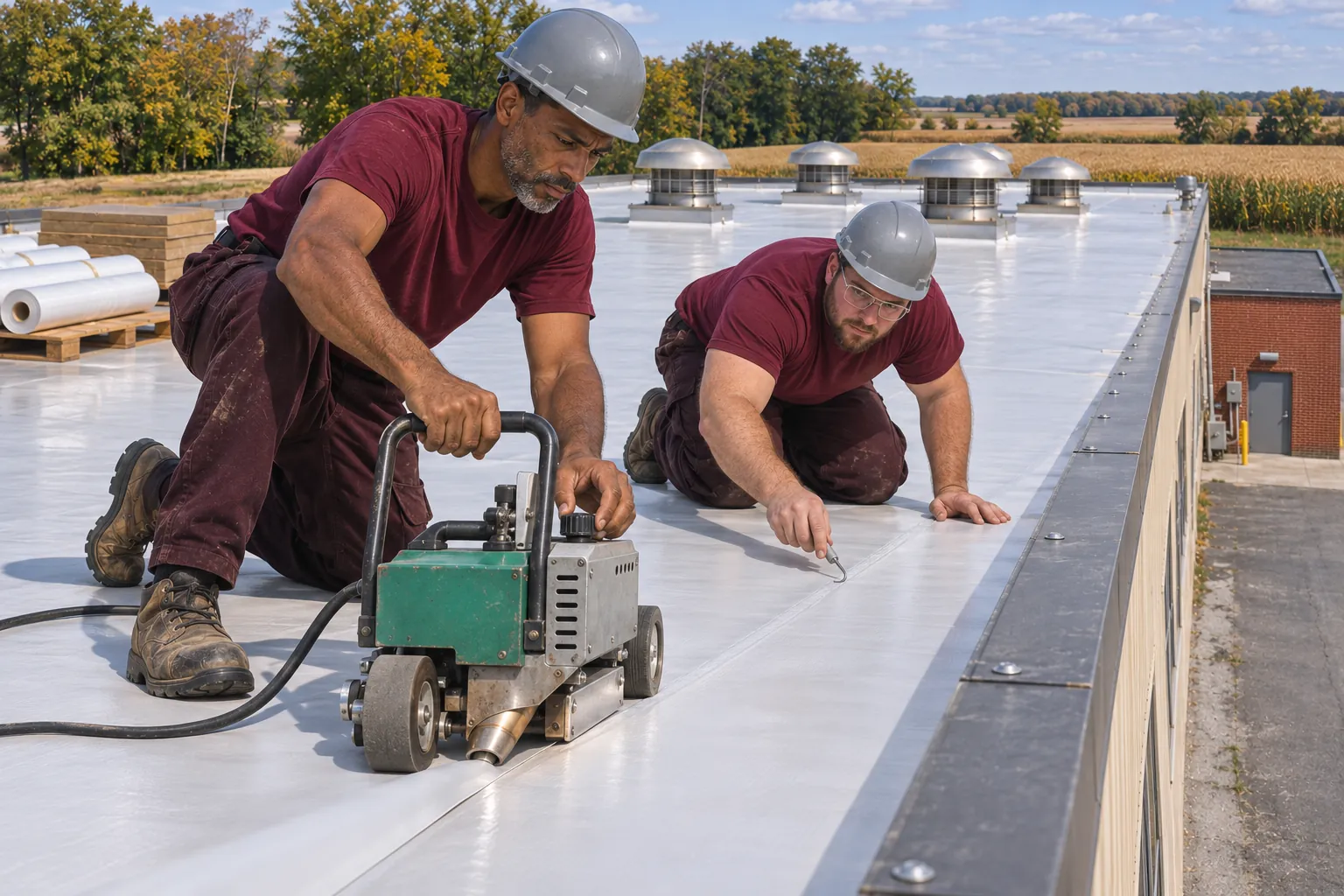 Welded Seams
Long storefront rows take welded TPO across every bay, with one continuous sheet replacing tenant-by-tenant patches.
 Taped Seams
Older flat roofs over offices and shops in town take rubber sheets wide enough to span bays with few seams.
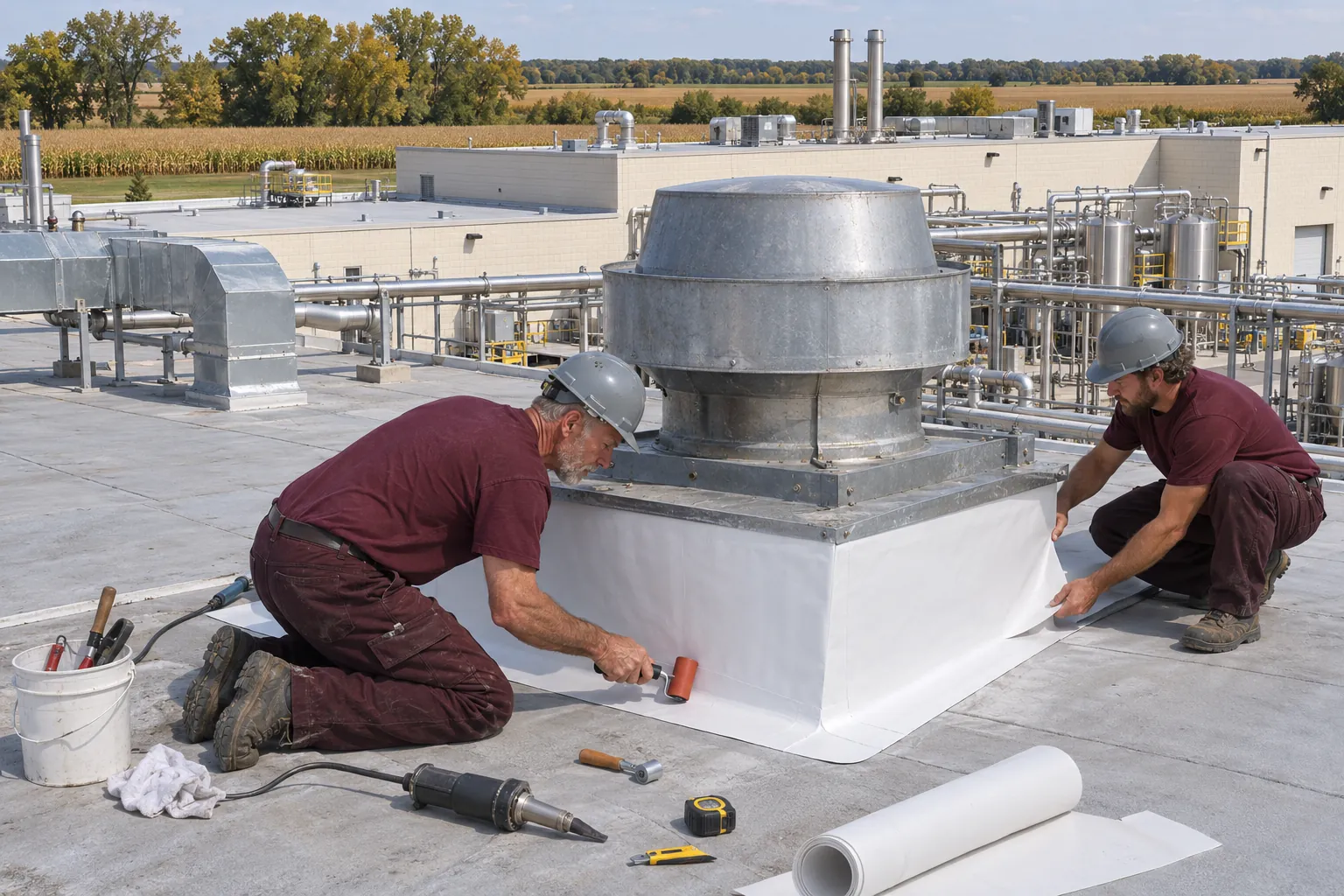 Flashed Curbs
Storage and light industrial buildings with fans and curbs get flashing details planned around the units.
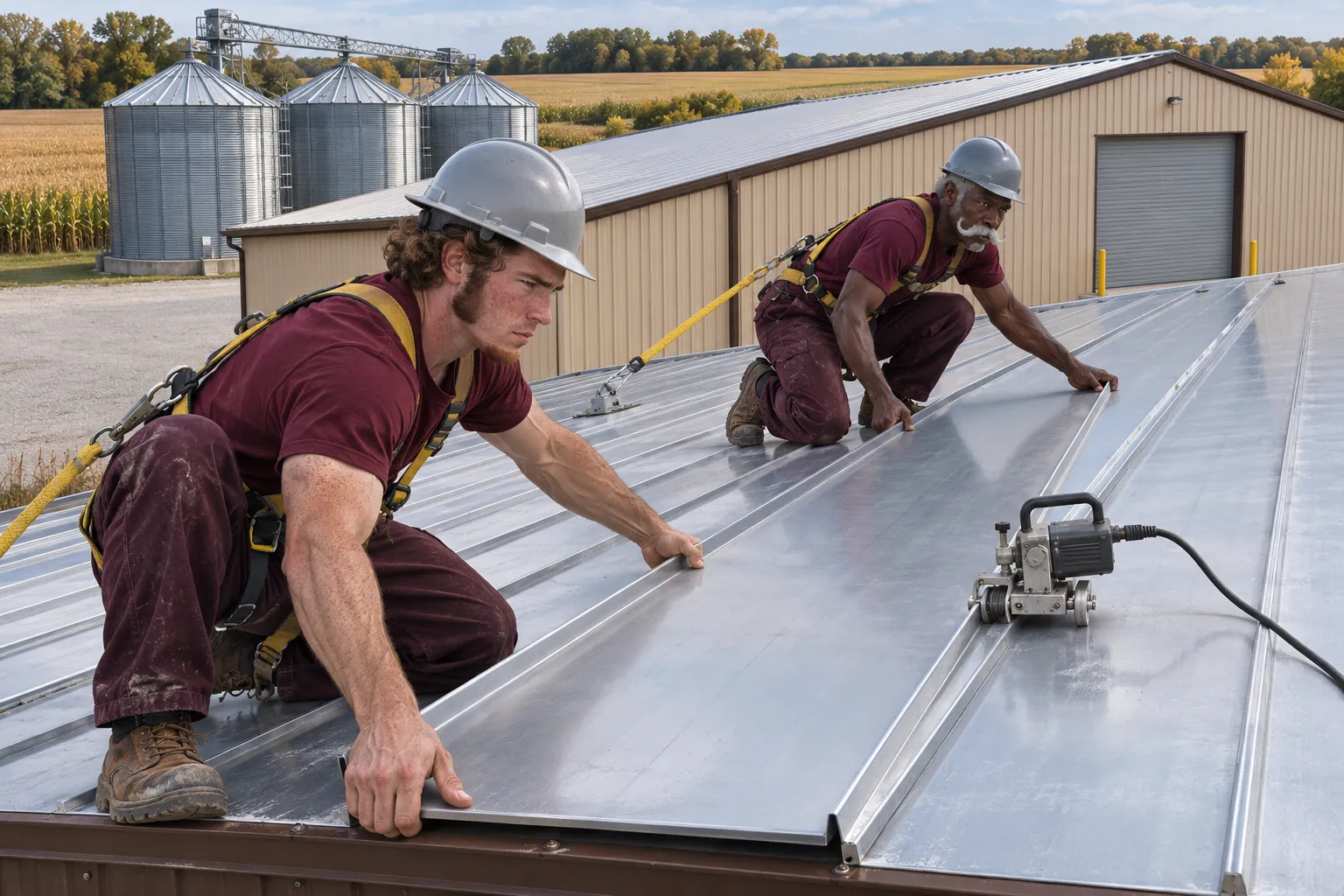 Standing Seams
Pitched storage buildings and shops behind the storefronts take panels that shed snow away from doors.
Four work-order rows keep a shared Linton roof moving without closing a single store.
Drains, divider walls, and patches get mapped across the whole roof, and cores show the layers under each tenant.
A bay schedule goes to you and each tenant with the days work will sit above them.
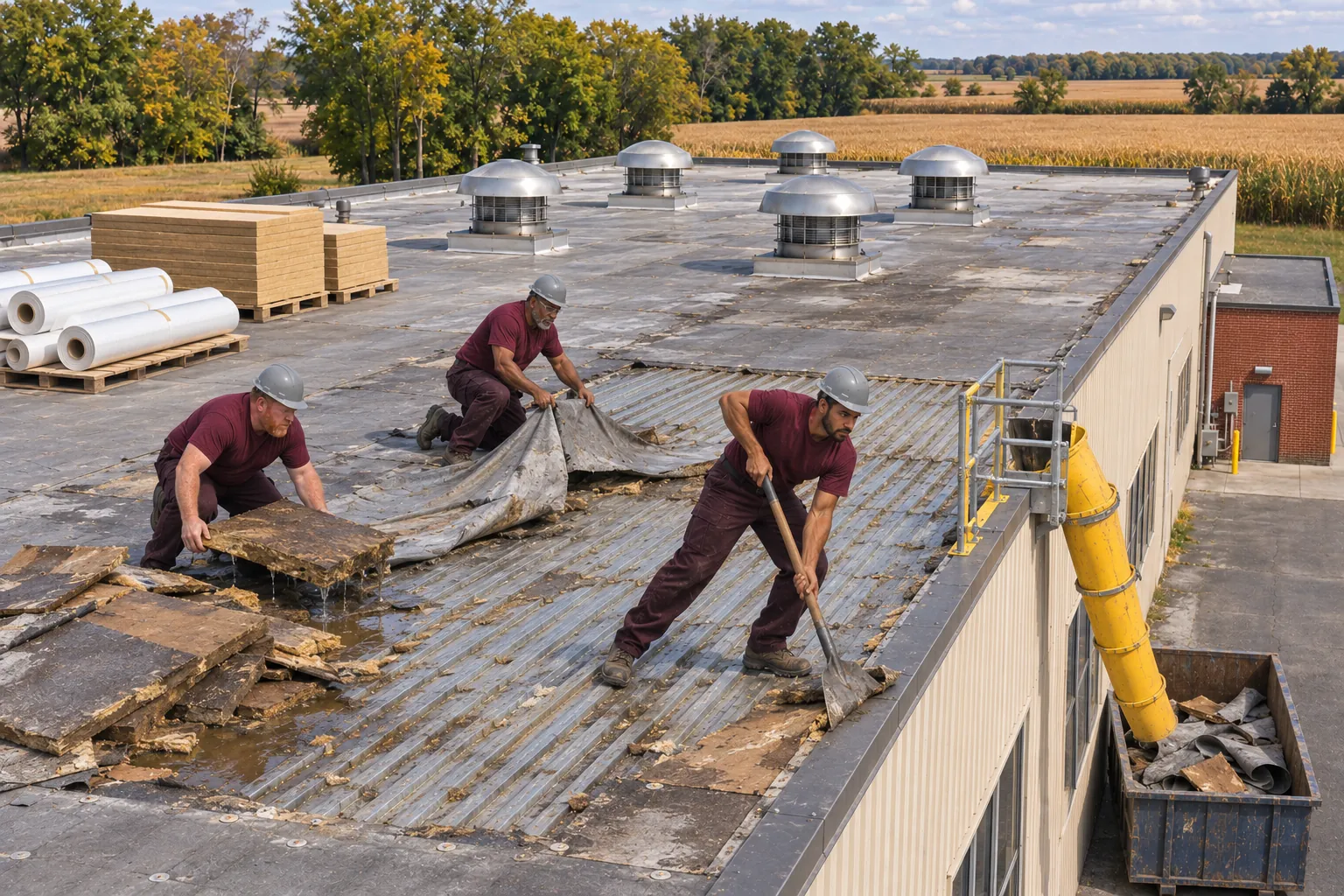
Each bay is torn off, insulated, and covered before the crew moves on, with divider walls reflashed as they go.
Tenants get a note when work above them ends, and the owner gets photos of every bay, drain, and divider wall flashing.
Debris is cleaned from storefronts daily, and the lift moves with the work so doors stay open.
Linton is one of six places where we install and replace commercial roofs.
Outside these towns? Call us or send us a message.
Home base: plants, warehouses, offices, and downtown blocks.
Seasonal work windows and nightly tie-ins on Clay County roofs.
Metal buildings joined to low-slope plant roofs.
Big warehouse roofs replaced around dock schedules.
Recover or tear-off, decided by the layers already up there.
Flat and metal roofs on Linton shops, offices, and storage buildings are all work we take.
Drainage, the existing layers, and the deck get checked before we recommend TPO, EPDM, or metal. Owners in nearby Greene County towns can call to confirm coverage.
Sun and heat expand the roof surface and age the membrane, adding stress to seams that already shrink each winter.
Dark membranes run hotter than white ones. Reflective TPO cuts heat gain over cooled rooms, while EPDM flexes with the swings.
Shared roofs get one scope for the building and a bay schedule for each tenant.
Owners usually handle the contract, and tenants get dates in writing so stock and customers can be planned around the work.
Call us with the shop address and a note on how many businesses share the roof.
We set up a roof walk, check every bay that shares the roof, and write one scope for the building.
Small storefront and storage roofs in Linton get the same core cuts and written scope as large ones.
Short jobs still follow a bay schedule if more than one business sits under the roof.
That depends on the lease, so check who carries roof duties before work starts.
On the roof side, we trace the leak across the bays and show the owner where water enters, which often sits over a different shop.
Tell us how many businesses share the roof. We walk every bay and write one scope for the building.