Meltwater Backing Up at Drains
Daytime melt refreezes in the drain bowl overnight, and the next melt backs up under laps that were never built to hold standing water.
As a Brazil commercial roofing contractor, we replace roofs on shops, plants, and offices in Brazil, timing each tear-off for dry weather and sealing every section nightly.
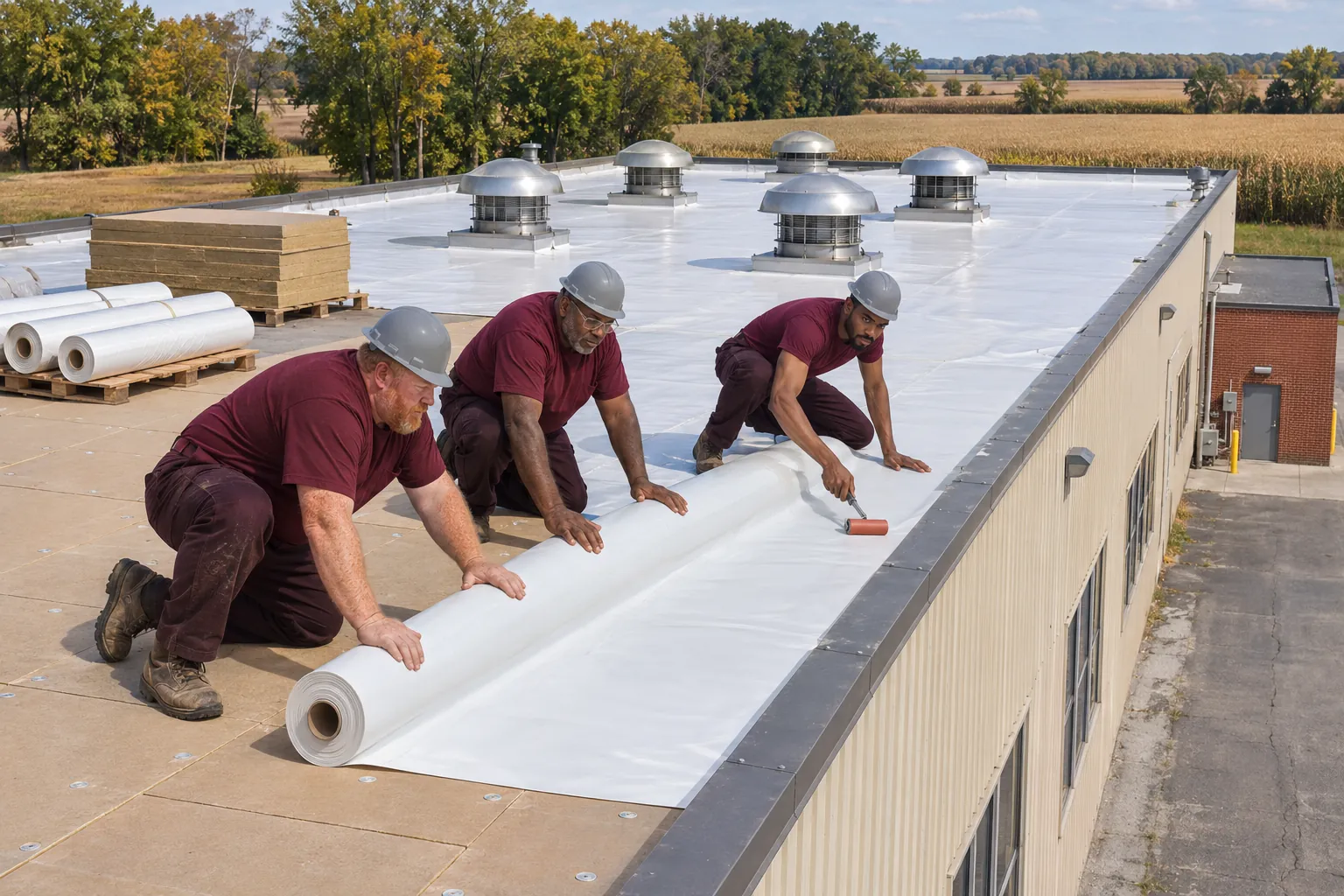
Brazil commercial roofing jobs live or die by the weather window. We plan the tear-off around rain, cold, and snowmelt before the first dumpster arrives.
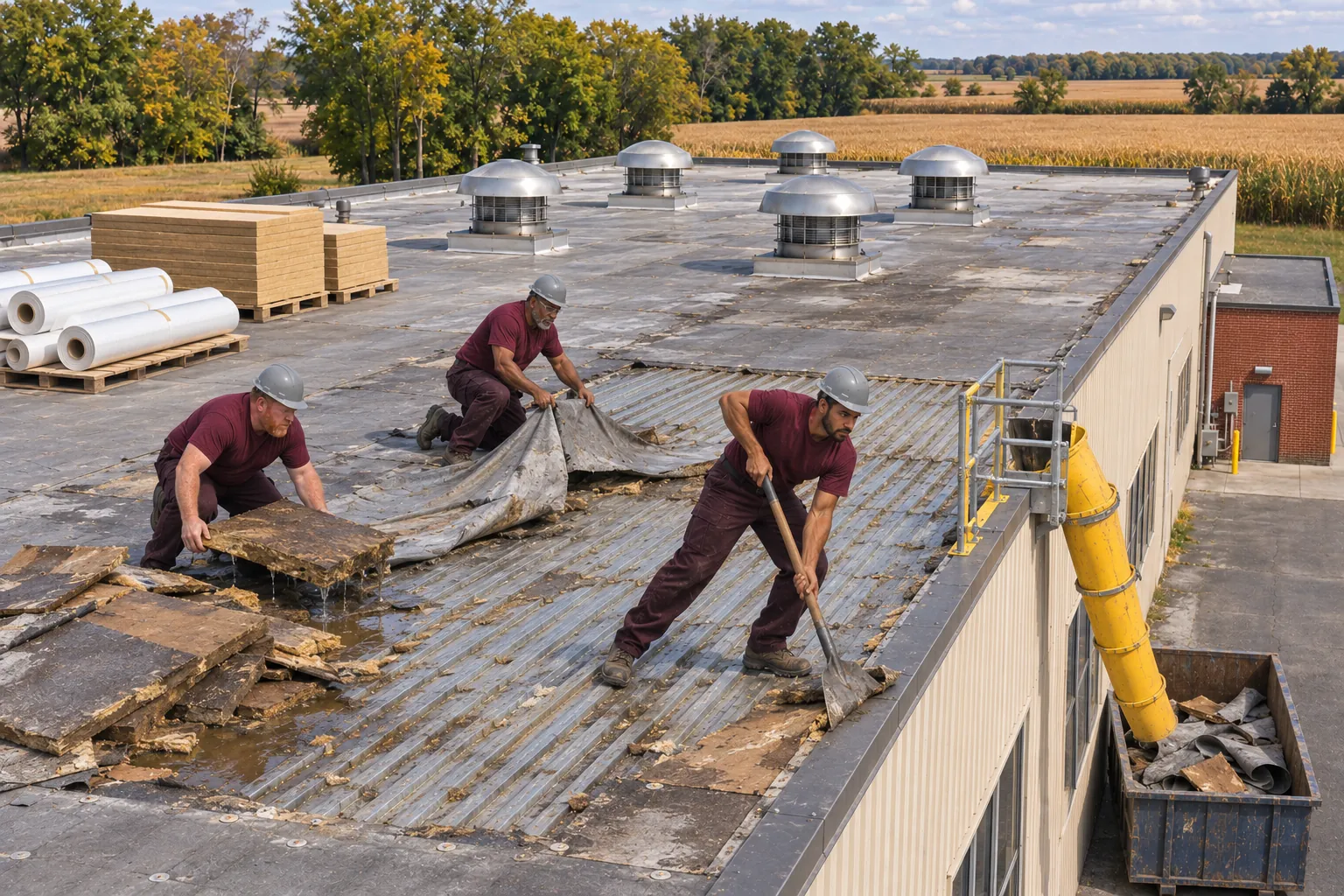
Adhesives need dry decks and mild temperatures, and welds need steady heat. Spring rain and late fall cold both shorten the days a roof can stay open, so sections are sized to what can close before dark.
Every evening, the edge of the opened section gets a watertight tie-in to the old roof. If a storm moves in midweek, nothing below gets wet while the work waits.
These four conditions bring most Brazil owners to call. Each one gets worse as winter moves in.
Daytime melt refreezes in the drain bowl overnight, and the next melt backs up under laps that were never built to hold standing water.
Freeze-thaw cycles work at the corners where roof meets wall. Once the flashing lifts, every rain sends water behind it.
Decks that sagged over years hold water near the middle bays. Tapered insulation on the new roof slopes it back toward the drains.
Exposed-fastener shop roofs rust where water sits in the side laps. Panels with rust holes get replaced before the new roof goes on.
Weather-timed work helps everyone who uses the building while the roof is open.
All four systems go on Brazil buildings. The cards note what weather each one needs during install.
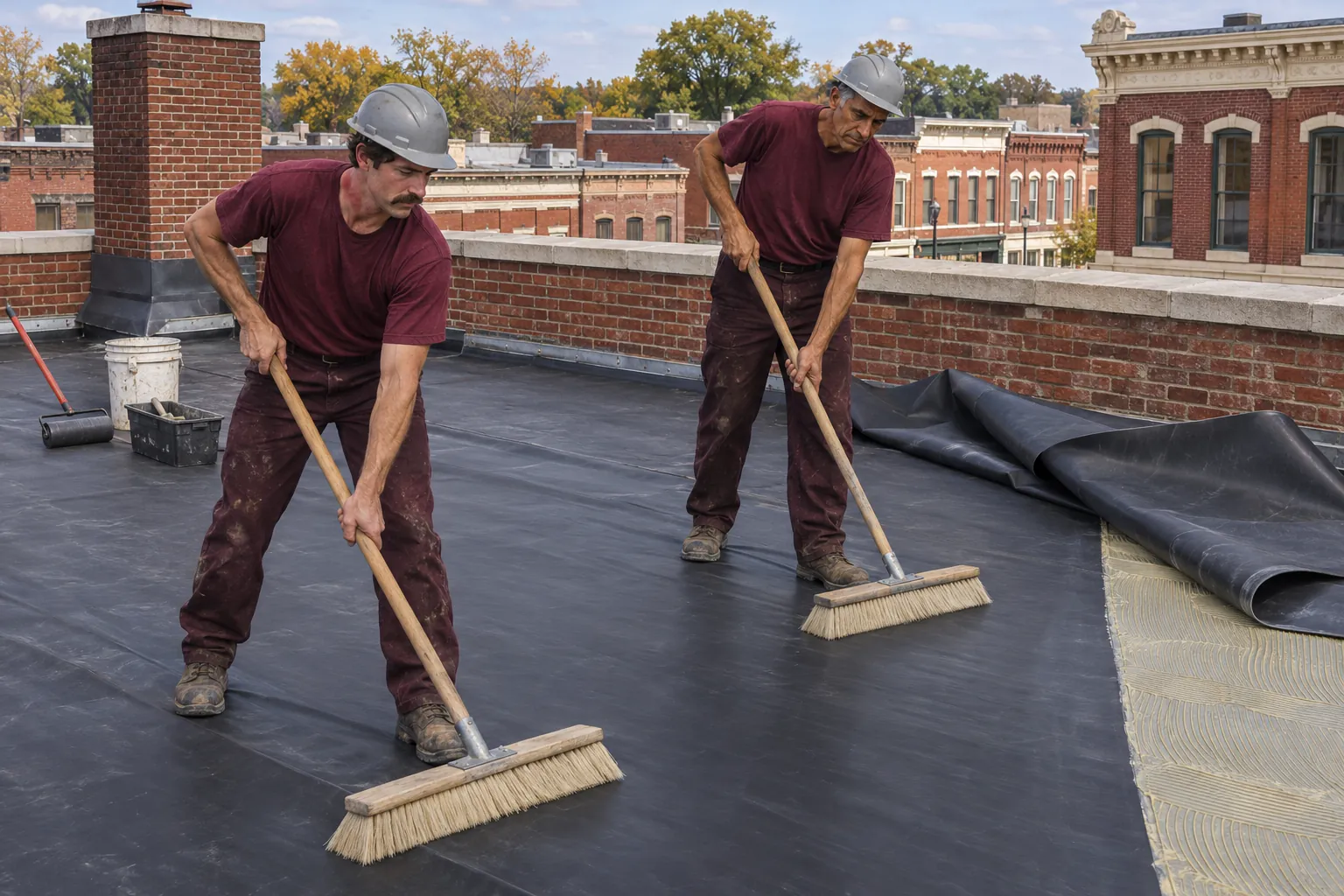
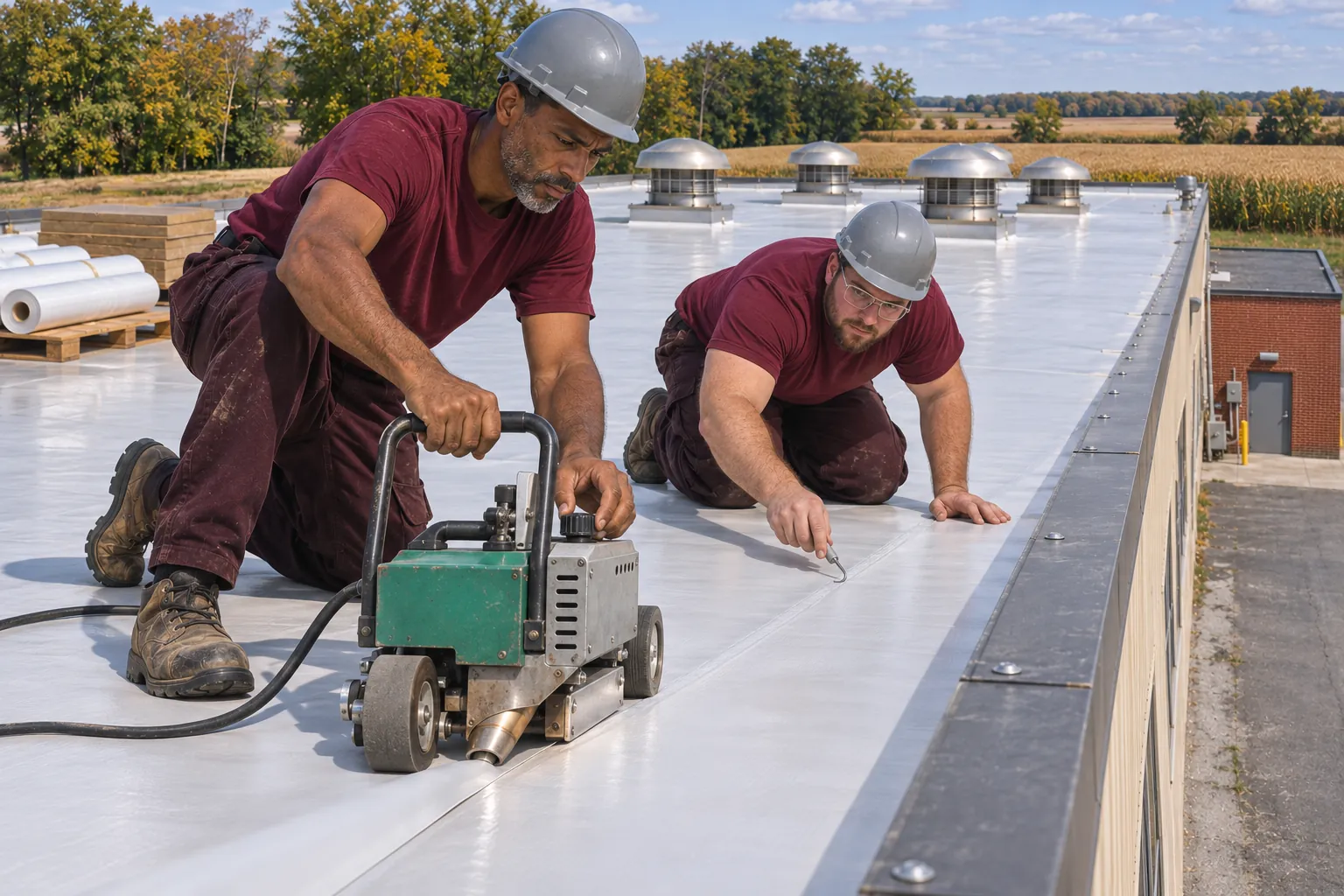 Welded Seams
Welding needs steady heat, so TPO on Brazil warehouses goes down from spring through mid fall, with a test weld each morning.
 Taped Seams
Adhered rubber wants a dry deck and mild air for the glue, so EPDM jobs are booked away from cold snaps.
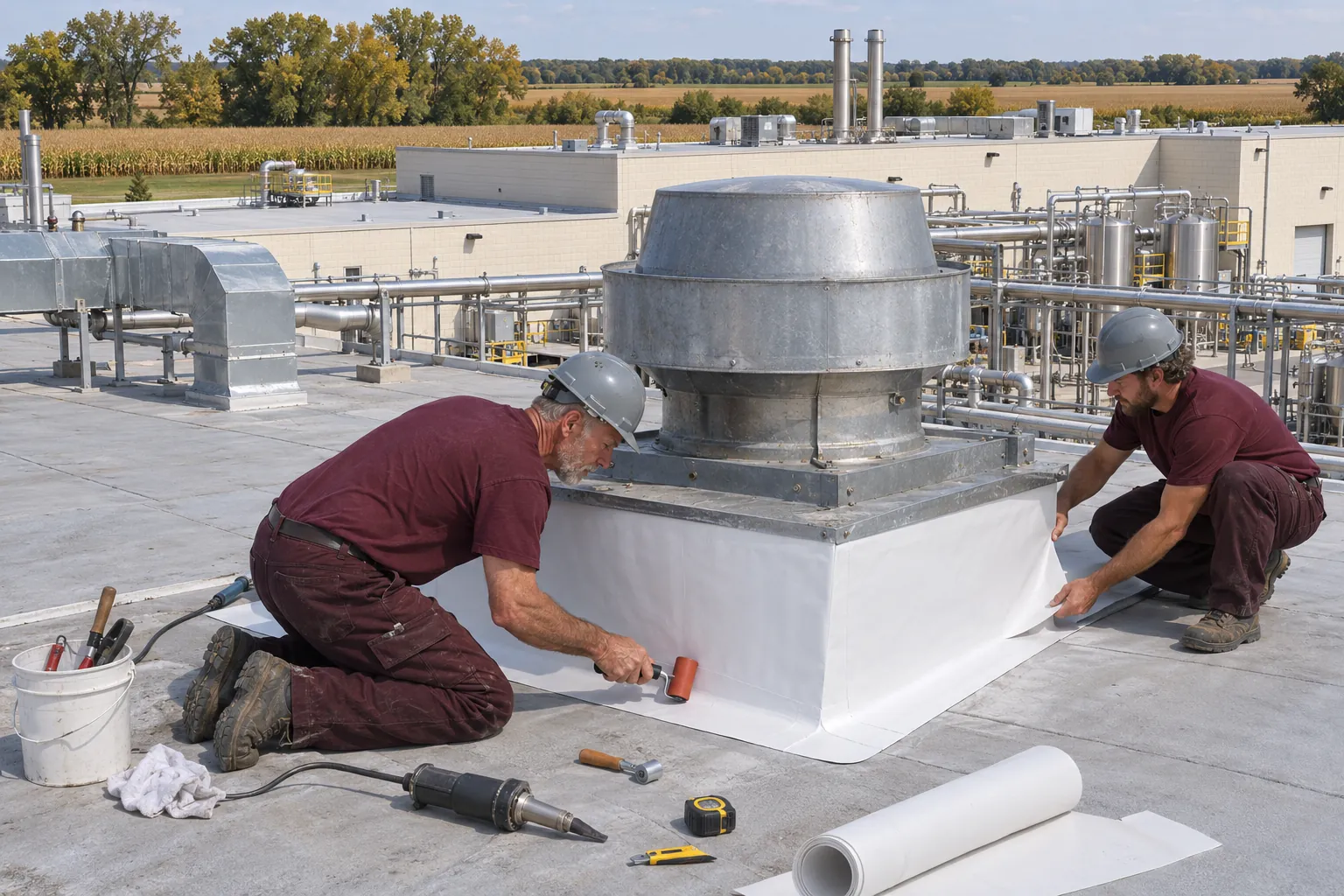 Flashed Curbs
Plant roofs get sections sized to the forecast, with shutdowns of exhaust fans set on dry days.
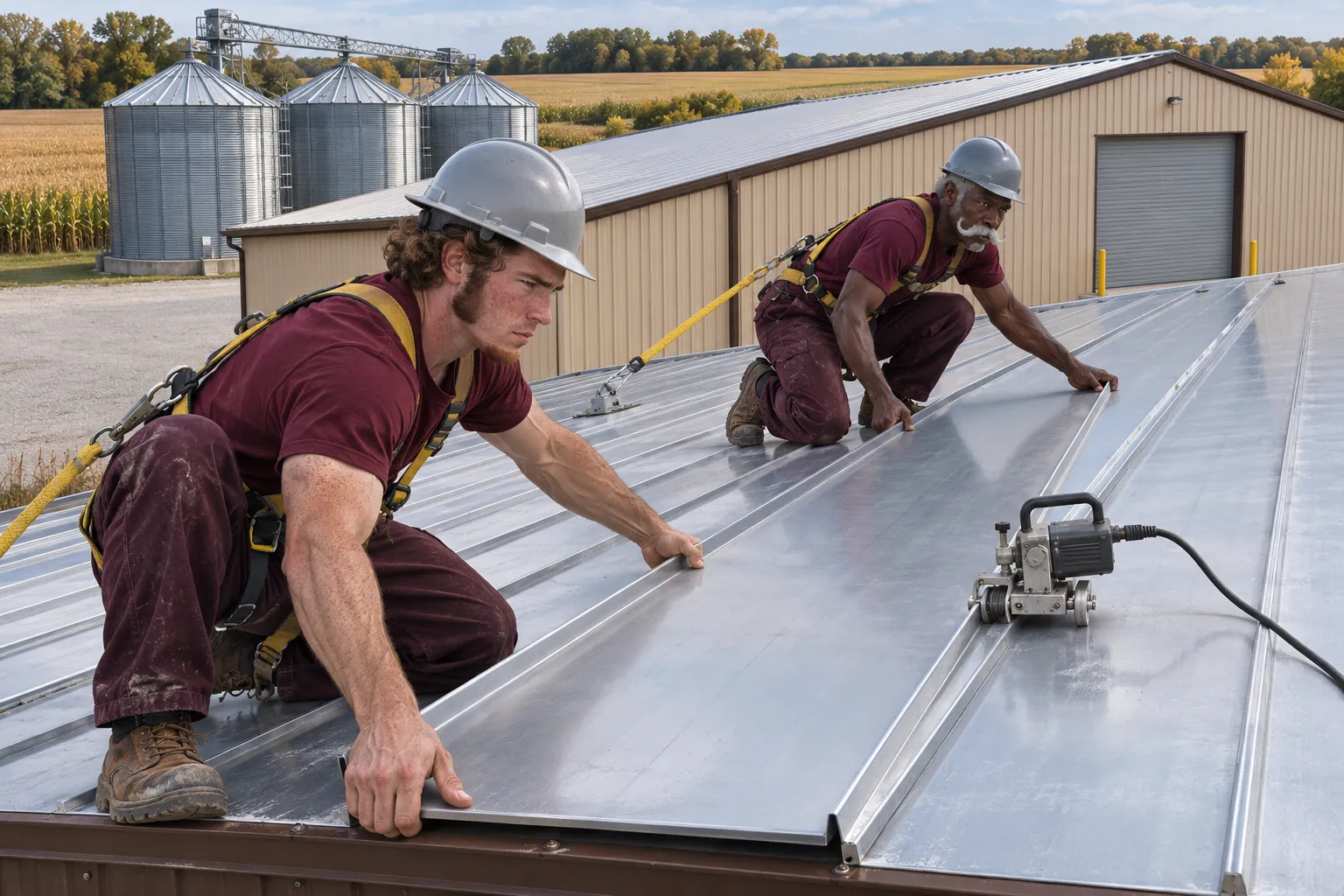 Standing Seams
Panels go on in cooler weather than membrane, which makes metal the late-season choice for shops and barns.
Four rows on the work order keep a Brazil roof on schedule and dry.
Cores show what is wet, and every drain and scupper is checked for ice damage from last winter.
The scope sets the system and a start date inside the window that system needs for welding or adhesive.
Each section is torn off, insulated, and covered before dark, with a tie-in at the edge every night.
The lift and dumpster sit away from doors and parking, and roofing debris gets picked up before customers arrive each morning.
Drains, flashings, and seams are photographed and handed over with the scope when the last section closes.
Brazil sits among five other places where we install and replace commercial roofs.
Outside these towns? Call us or send us a message.
Home base: plants, warehouses, offices, and downtown blocks.
Shops and storage buildings sharing one long roof.
Metal buildings joined to low-slope plant roofs.
Big warehouse roofs replaced around dock schedules.
Recover or tear-off, decided by the layers already up there.
We install TPO, EPDM, and metal roofs on Brazil shops, plants, and offices, plus buildings in nearby Clay County communities.
Each job starts with a roof survey and cores. If you are just outside town, call and we will tell you whether we can get there.
Melt by day refreezes at night, so ice plugs drains, scuppers, and gutters.
The next melt backs up against seams and flashings built to shed water rather than hold it. Clear drains, slope toward them, and tight flashings stop most of it.
Roof size and the layers coming off set most of it.
Deck repairs, insulation thickness, the system chosen, curbs and drains, and crane time add the rest. A free roof walk measures each item before we write a number.
Any size works, from a single storefront to a plant with several roofs.
Small roofs still get cores and a written scope, and larger ones get a section plan built around your hours.
Small shop roofs in and around Brazil get the same roof walk and scope as a plant.
Many shops carry exposed-fastener metal, so screws, laps, and gutters get checked along with any membrane on attached offices.
Late spring through mid fall gives the most dry, mild days for welding and adhesive.
Metal panels can go on later into the cold season. Whatever the month, each opened section closes watertight before the crew leaves.
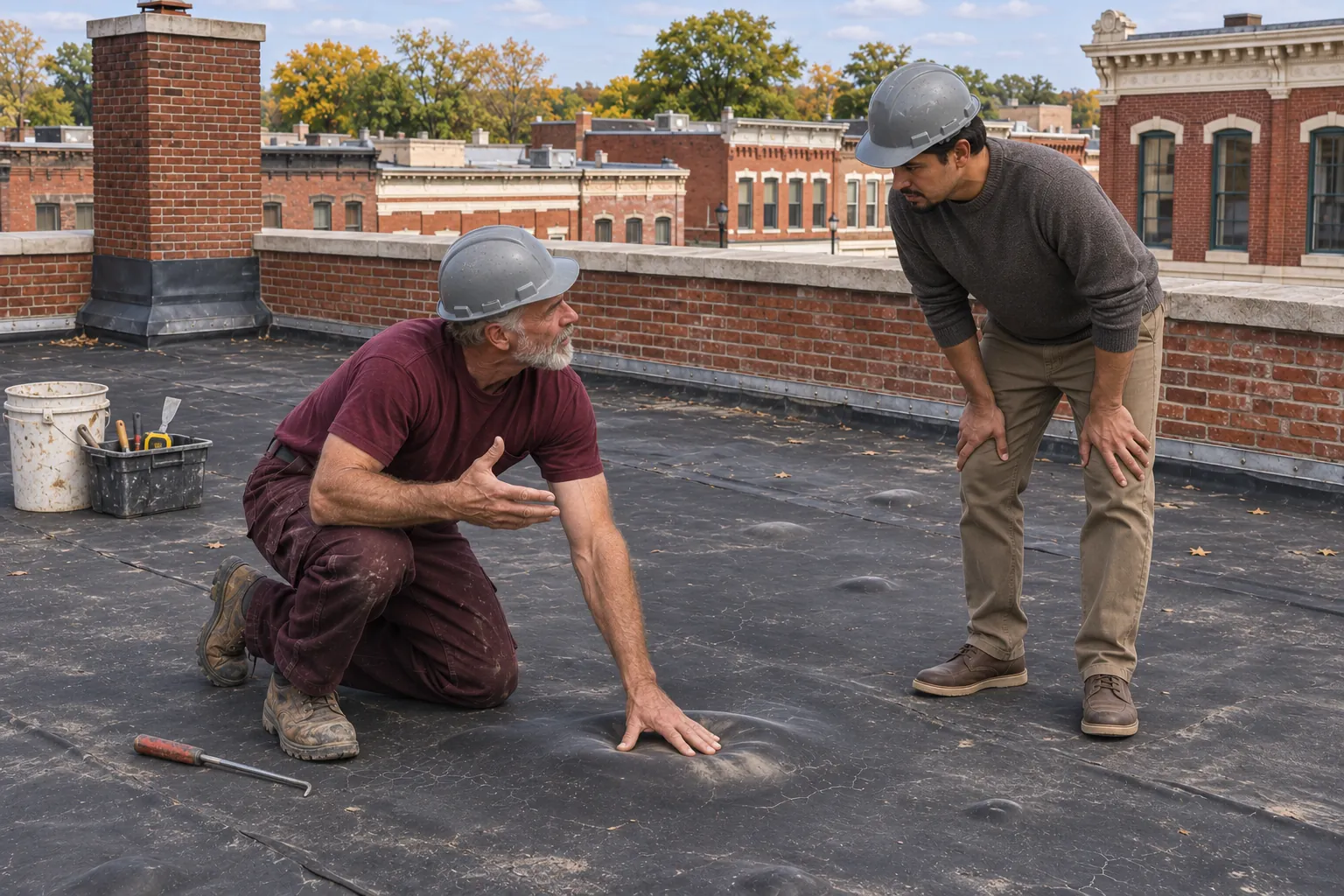
Send the address and the season you want the work done. We walk the roof and book a dry window.