Leaks Where Two Roofs Meet
Panel runoff pours onto the flat roof at one wall, and the base flashing there was never sized for that much water.

As a Clinton commercial roofing contractor, we install and replace roofs on Clinton plants and metal buildings, flashing every joint where a panel roof meets a flat one.
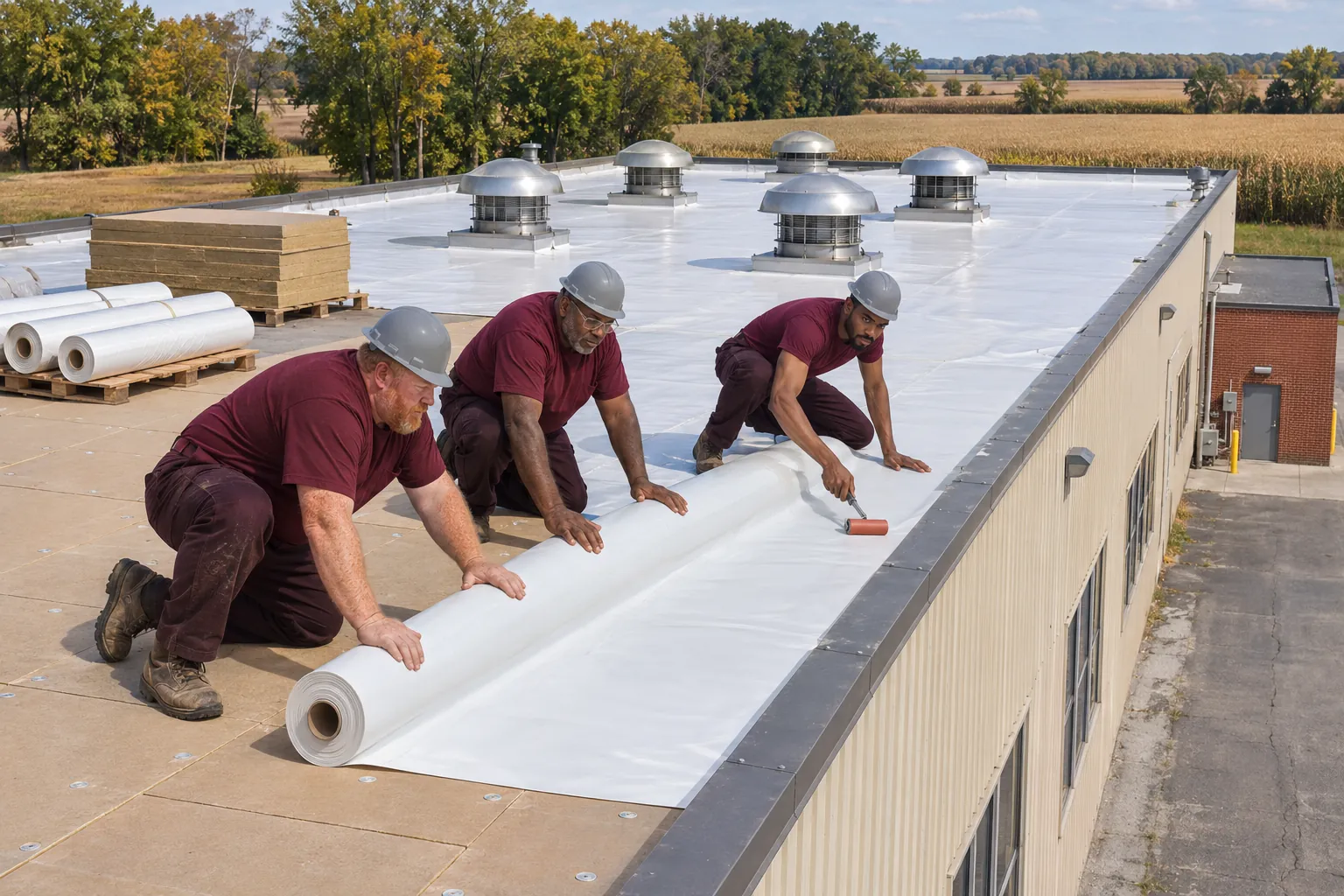
Clinton commercial roofing often covers a metal building bolted onto a low-slope plant. The line where the two roofs meet decides whether the building stays dry.
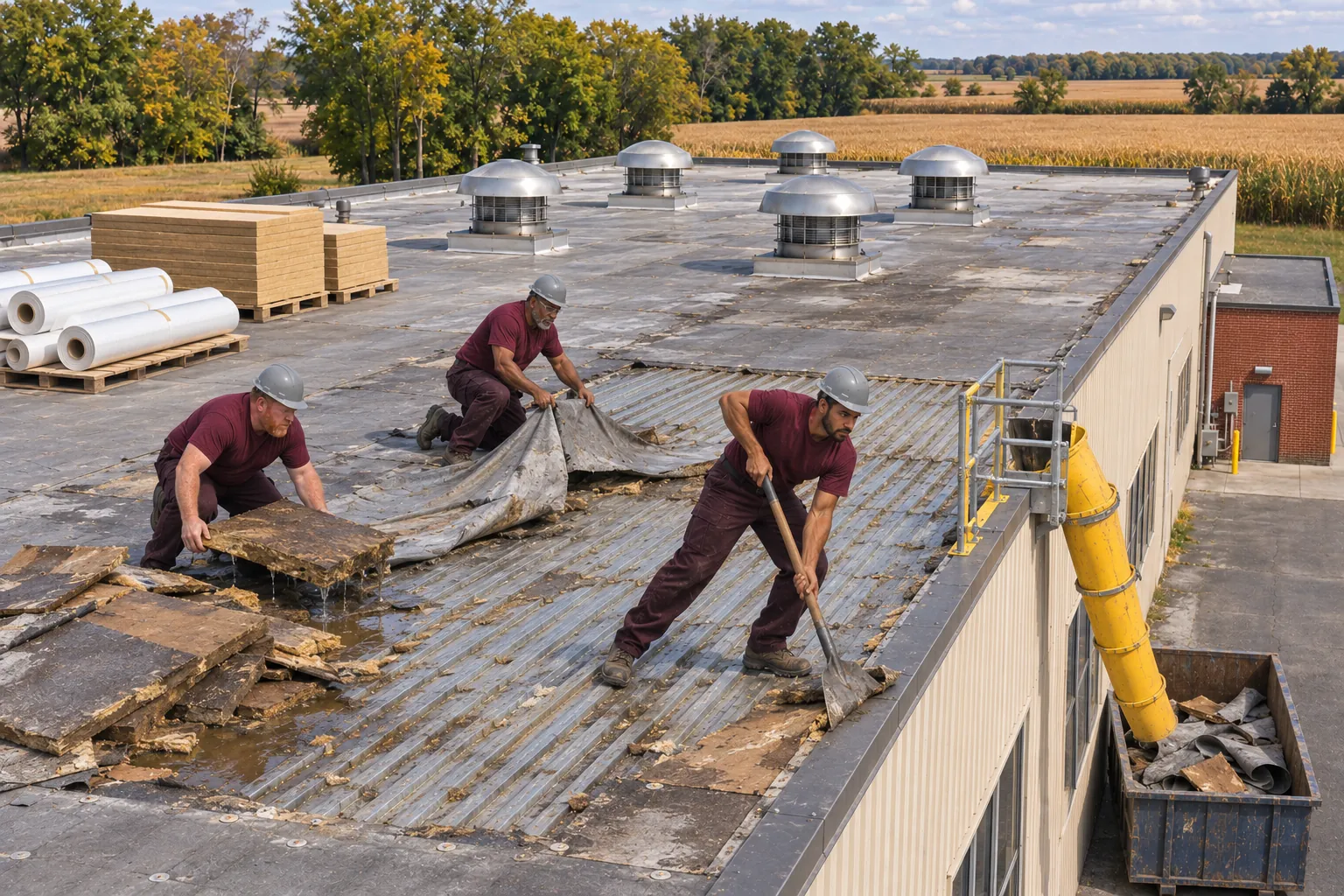
Panel roofs drain fast onto the flat roof next to them. That runoff lands on one strip of membrane, often at a wall with old flashing and a gutter that overflows in heavy rain.
We treat that joint as its own detail, with a cricket or diverter on the flat side, flashing up the metal wall, and gutters sized for the panel runoff.
Mixed buildings leak at the seams between systems. These four come up on most Clinton walks.
Panel runoff pours onto the flat roof at one wall, and the base flashing there was never sized for that much water.
Spring hail can crush the insulation under a flat sheet without a visible hole. Cores show the damage the surface hides.
Exposed-fastener panels lose washers over time, and every loose screw on the upper roof sends water onto the lower one.
Plant equipment sits on the low roof, with curbs that end up too short once new insulation goes down.
Treating both roofs as one job pays off for the people who own, run, and work inside the building.
Clinton buildings often need two of these at once. Each card notes how it ties into the other roof.
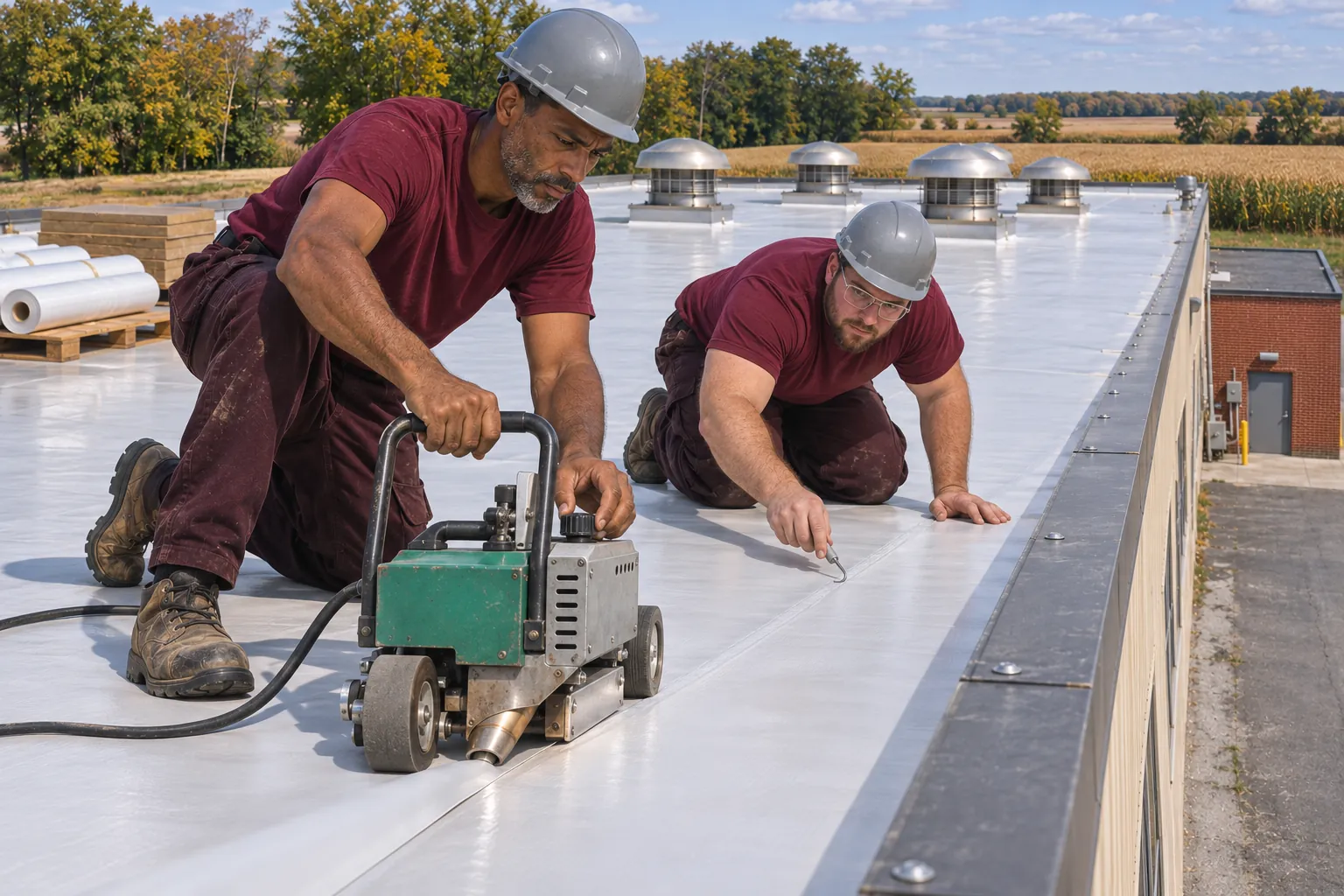 Welded Seams
Flat plant roofs take welded TPO, flashed up the neighboring metal wall where the panel runoff lands.
 Taped Seams
Lower office or break-room roofs off the plant take rubber sheets with a new termination bar at the metal siding.
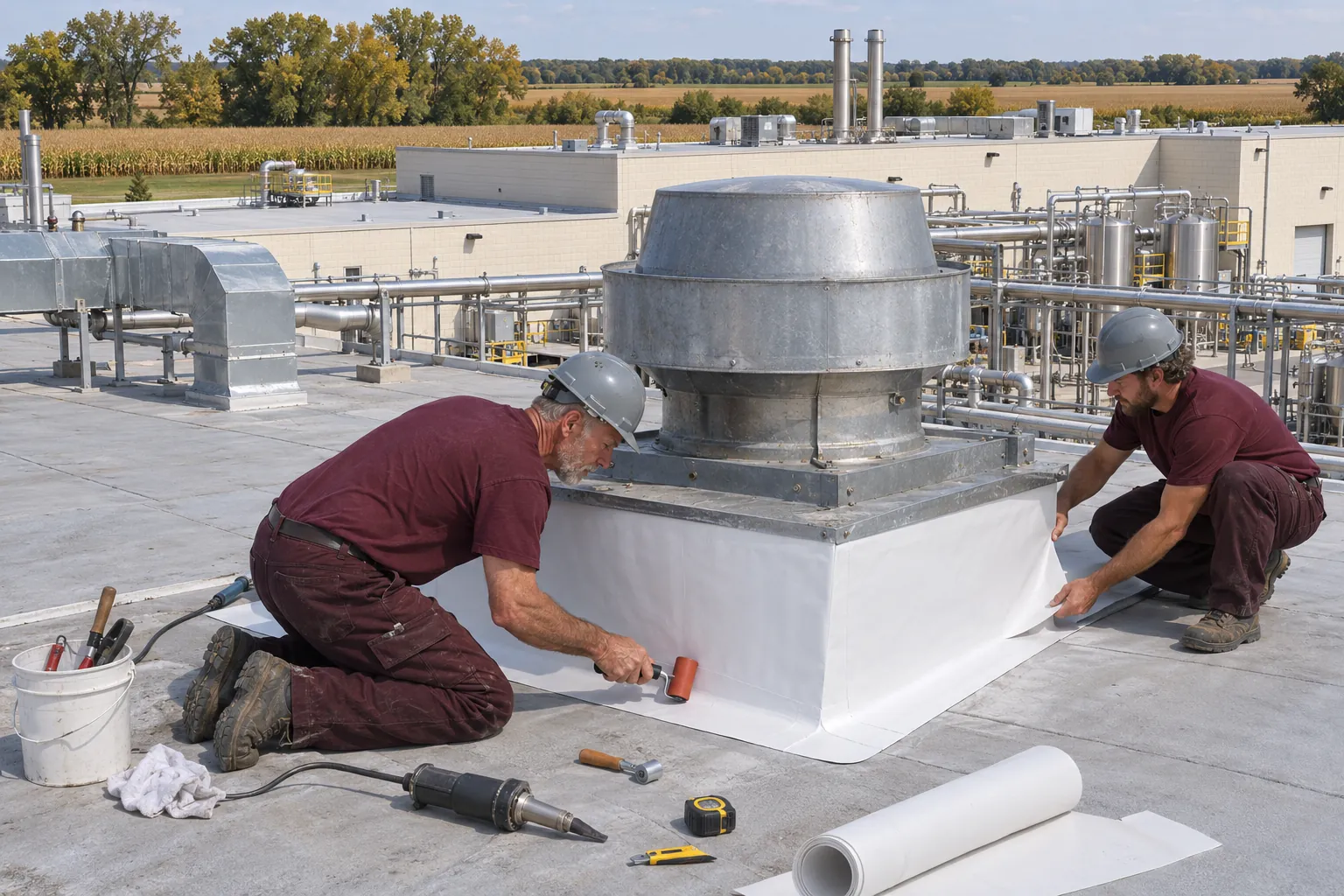 Flashed Curbs
Process units on the low roof get raised curbs and membrane matched to what the stacks vent.
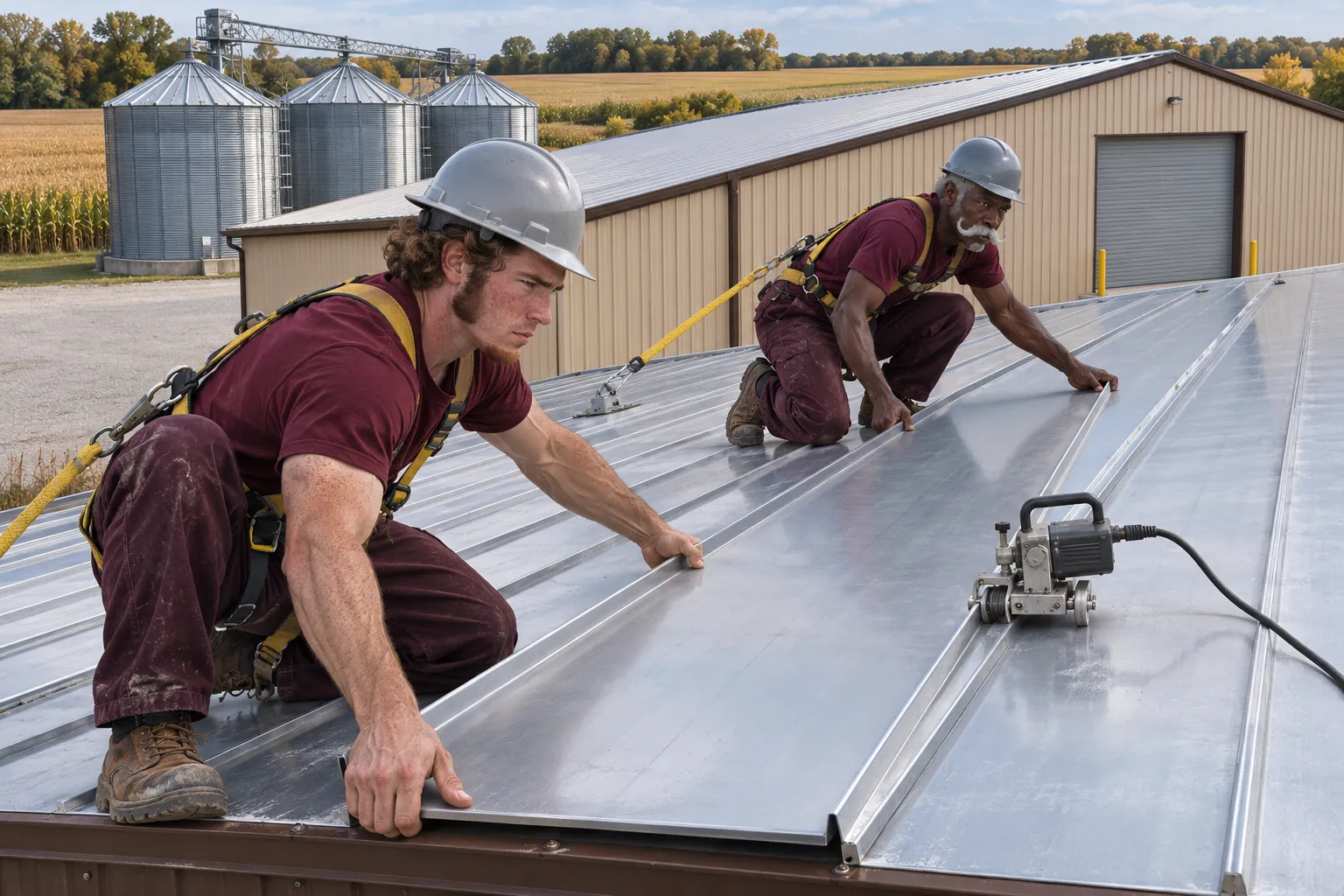 Standing Seams
Metal buildings get new screws, laps, or panels, with gutters sized for the roof below them.
Send the address. We price the metal and the membrane together.
Get A Free EstimateFour rows on the work order handle both roofs in one job.
Screws and laps on the metal side and cores on the flat side show what each roof needs and where they meet.
The scope draws the cricket, flashing, and gutter at the joint along with each roof system.
Each day’s section lines up with plant shifts, and unit shutdowns are booked by date.
Photos of the metal side, the flat side, and the joint between them go to you with the scope and the gutter sizes.
Sections are opened, rebuilt, and sealed each day, finishing at the joint so both roofs close together.
Clinton sits with five other places where we install and replace commercial roofs.
Outside these towns? Call us or send us a message.
Home base: plants, warehouses, offices, and downtown blocks.
Seasonal work windows and nightly tie-ins on Clay County roofs.
Shops and storage buildings sharing one long roof.
Big warehouse roofs replaced around dock schedules.
Recover or tear-off, decided by the layers already up there.
We roof industrial and commercial buildings in Clinton, including metal buildings and low-slope plants.
Sections follow your shifts, and rooftop equipment gets flashed into the new system. Call to talk through the building and your timeline.
Big hail can bruise insulation under the sheet, crack aged TPO, and puncture membrane over hard spots.
Ground views miss most of it, so after a storm we walk the roof, check seams and flashings, and cut cores where bruising is suspected.
Call with the building address and whether it has a metal roof, a flat roof, or both.
We set a roof walk that covers each roof and the joint between them.
Buildings with metal and membrane roofs get one contractor and one scope for both.
Splitting the job between two trades leaves the joint between roofs without an owner, which is where most leaks start.
Square footage of each roof and how many layers come off set the base.
Panel replacement, curb raising, crickets at the joint, gutters, and crane time add to it. A free roof walk measures both roofs.
Yes, in most cases, since loose screws upstairs send water onto the new membrane below.
Washers or panels on the metal side get replaced first, then the flat roof and the joint are rebuilt so both finish together.
Tell us about both roofs on the building. We walk each one and price the joint with them.