Industrial Plant Roof
- Rooftop Load
- Fans, ducts, and heavy units
- Exhaust
- Grease, steam, or process heat
- Scheduling
- Around shifts and shutdowns
- Membrane Choice
- Matched to what the stacks vent
- Safety
- Written plan near running equipment

As a Terre Haute industrial roofing contractor, we replace plant and warehouse roofs in sections around production, raising and reflashing every curb as we go.
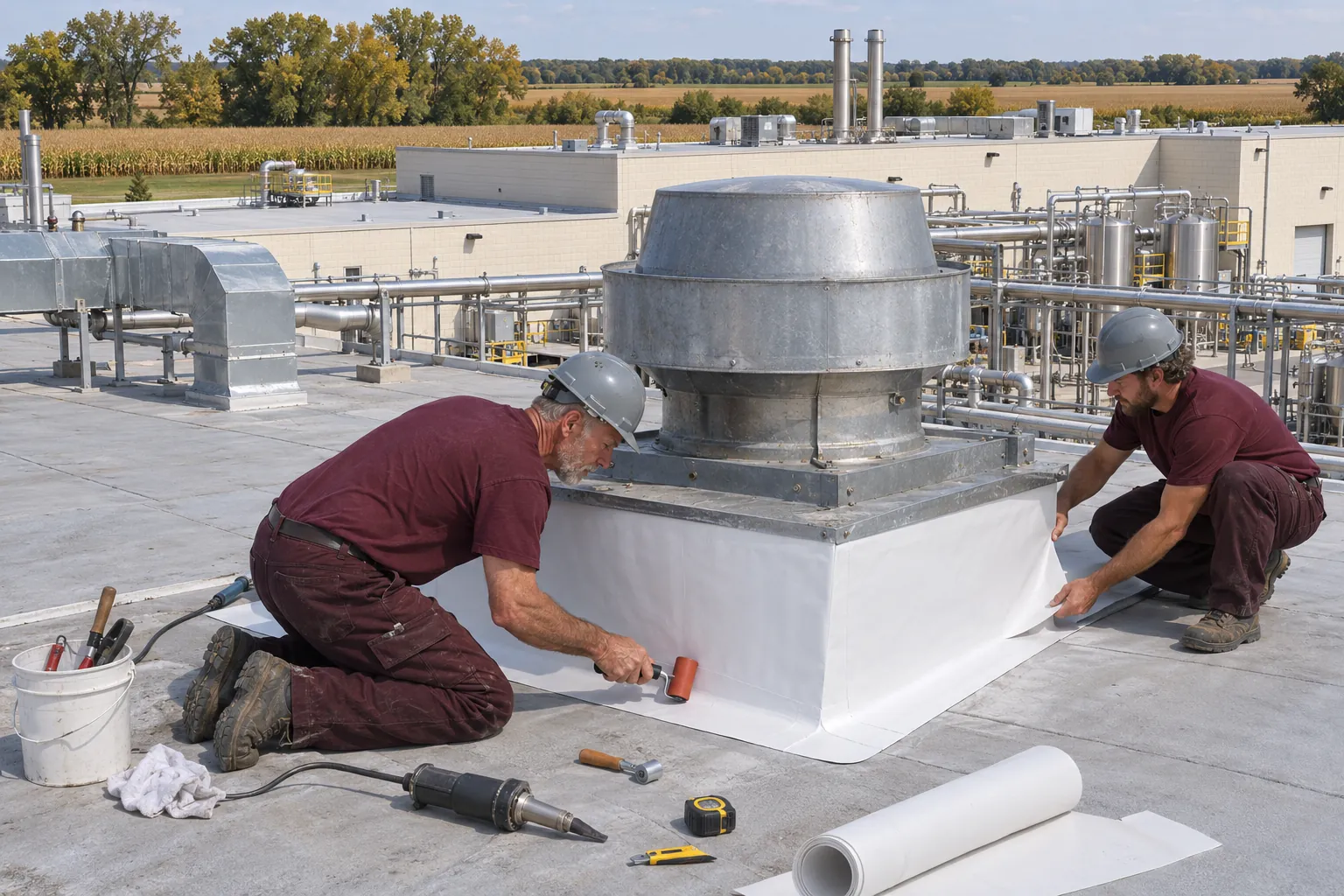
Terre Haute industrial roofing starts with what sits on the roof and what comes out of it. Here is how a plant roof differs from a standard commercial one.
Plant roofs wear out in places a standard roof never sees. These four show up on most food and printing plant walks.
Grease and steam from process vents soften some membranes around the fan. The sheet swells, then splits, while the rest of the field still looks fine.
Thicker insulation brings the field up to the top of old curbs. Raising each curb keeps the flashing above where water stands.
Mechanics carrying parts to the same units wear trenches in the surface. Punctures cluster along those routes and near the access hatch.
Steam and heat from processing rooms push moisture up into the roof. Cores often find wet insulation over ovens and wash-down areas.
Four decisions shape a plant roof. Each one comes from the cores, the equipment list, and how the building runs.
Membranes rated for grease or chemical exposure go around the stacks that need them, tied into the main field sheet.
Curbs get extended to clear the new insulation, then wrapped with new flashing tied into the field.
Pads follow the actual paths mechanics walk, from the hatch to each unit, so traffic stays off the open sheet.
Material lifts are booked for weekends or shift changes, and staging stays clear of forklift lanes and dock aprons.
A plant roof touches production, maintenance, and safety. Each role sees a different gain.
Call and tell us which line or room is affected. Curbs and stacks above get checked first.
Call UsSend the address and your shift pattern. The section plan follows it.
Get A Free EstimatePlant work runs on a tighter work order than most roofs. These five rows cover it.
Every unit, stack, and duct gets listed with its curb height, and cores near hot rooms show how far moisture has spread.
A written safety plan covers work near running equipment, and the section map ties each day to the rooms below.
Exhaust fans and makeup air units get shutdown windows, and crane lifts go on weekends or between shifts.
Each section is opened, the deck repaired, insulation laid, curbs raised, and the new system installed and sealed before crews leave.
Daily updates tell your plant manager what is open and what closed. The final file holds curb, stack, and drain photos.
Plants often sit beside offices and storage buildings with different roofs. These three cover them.
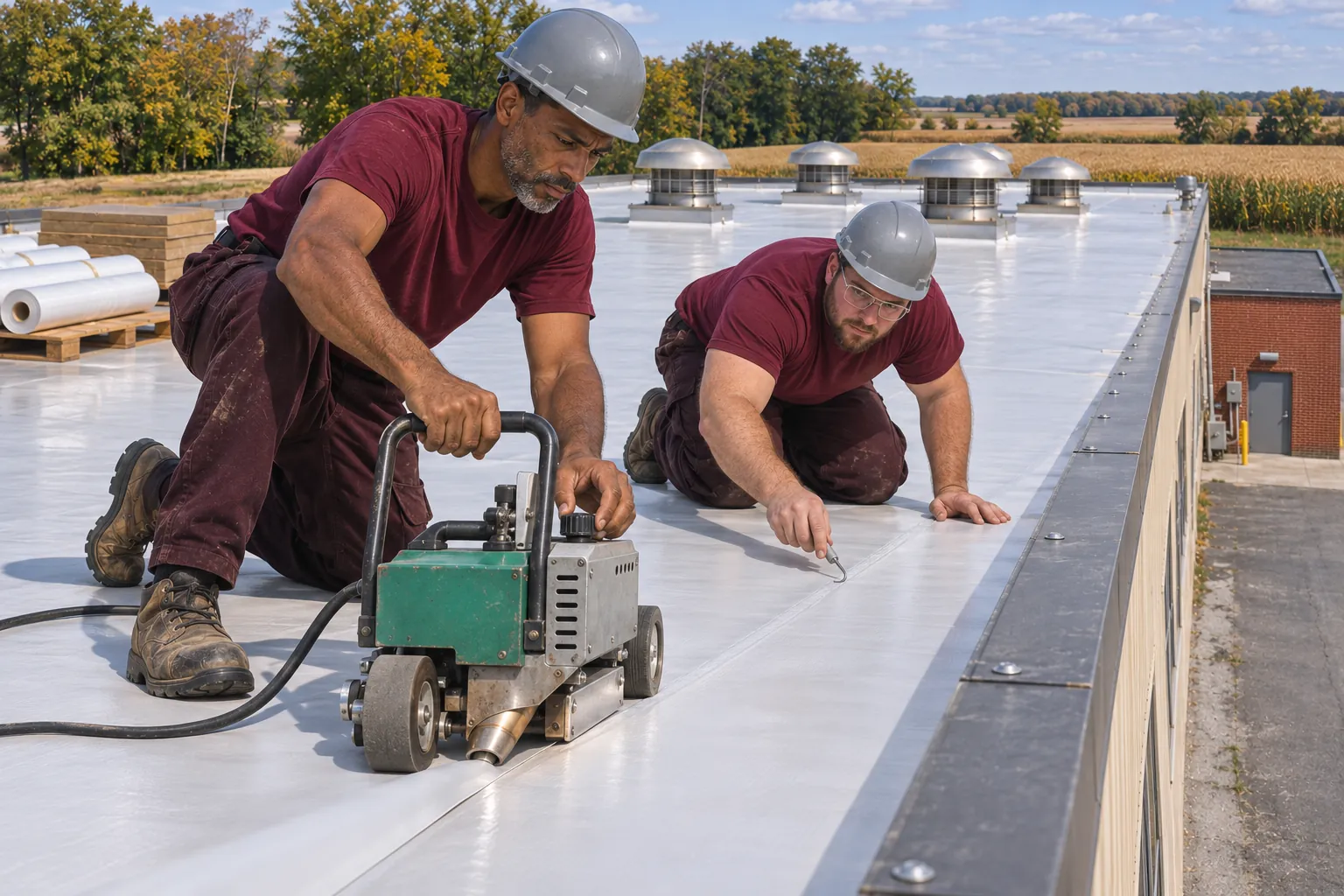 Welded Seams
Office wings and warehouse bays off the plant floor often take welded white TPO.
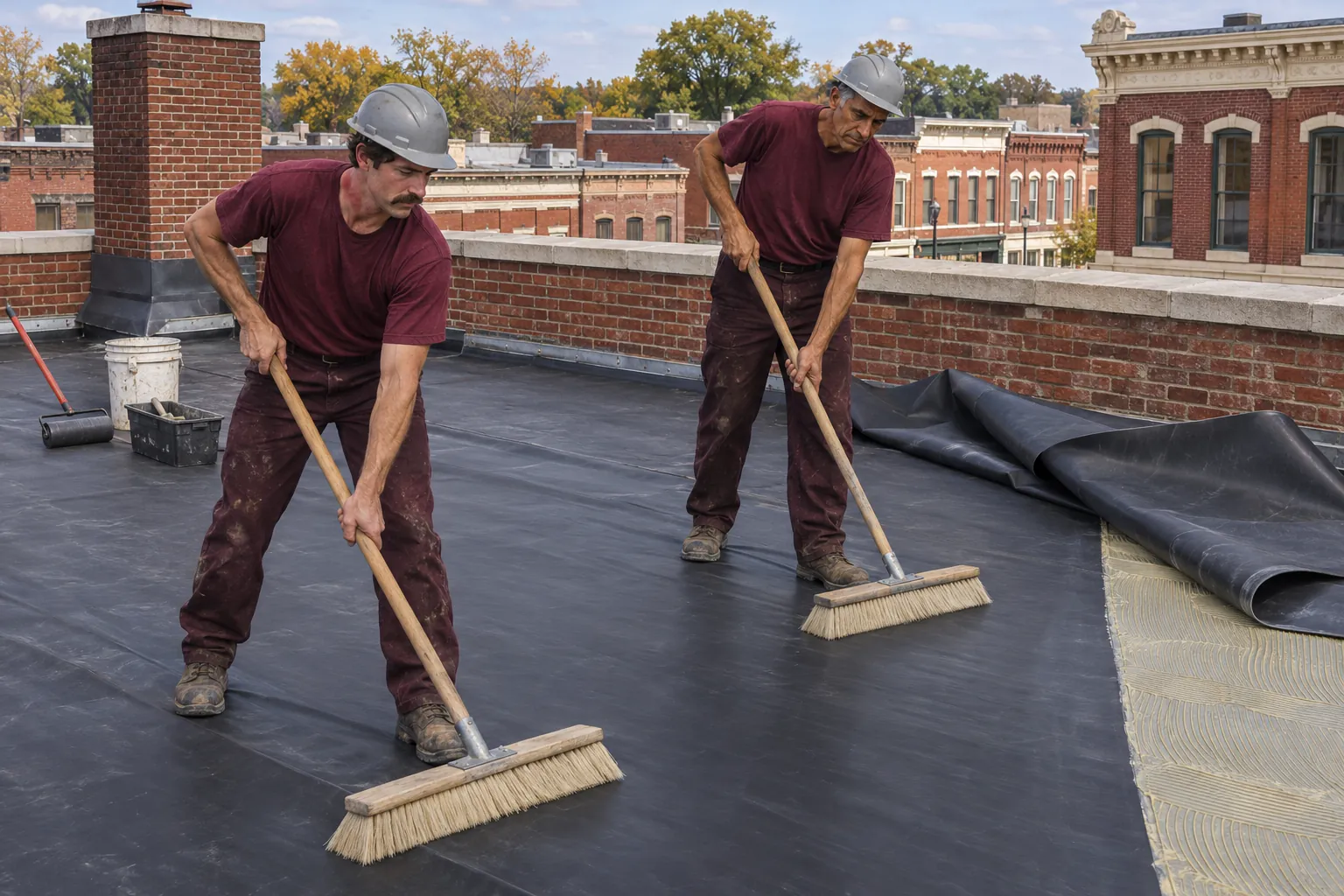 Taped Seams
Older flat roofs over break rooms and offices fit rubber sheets with few seams.
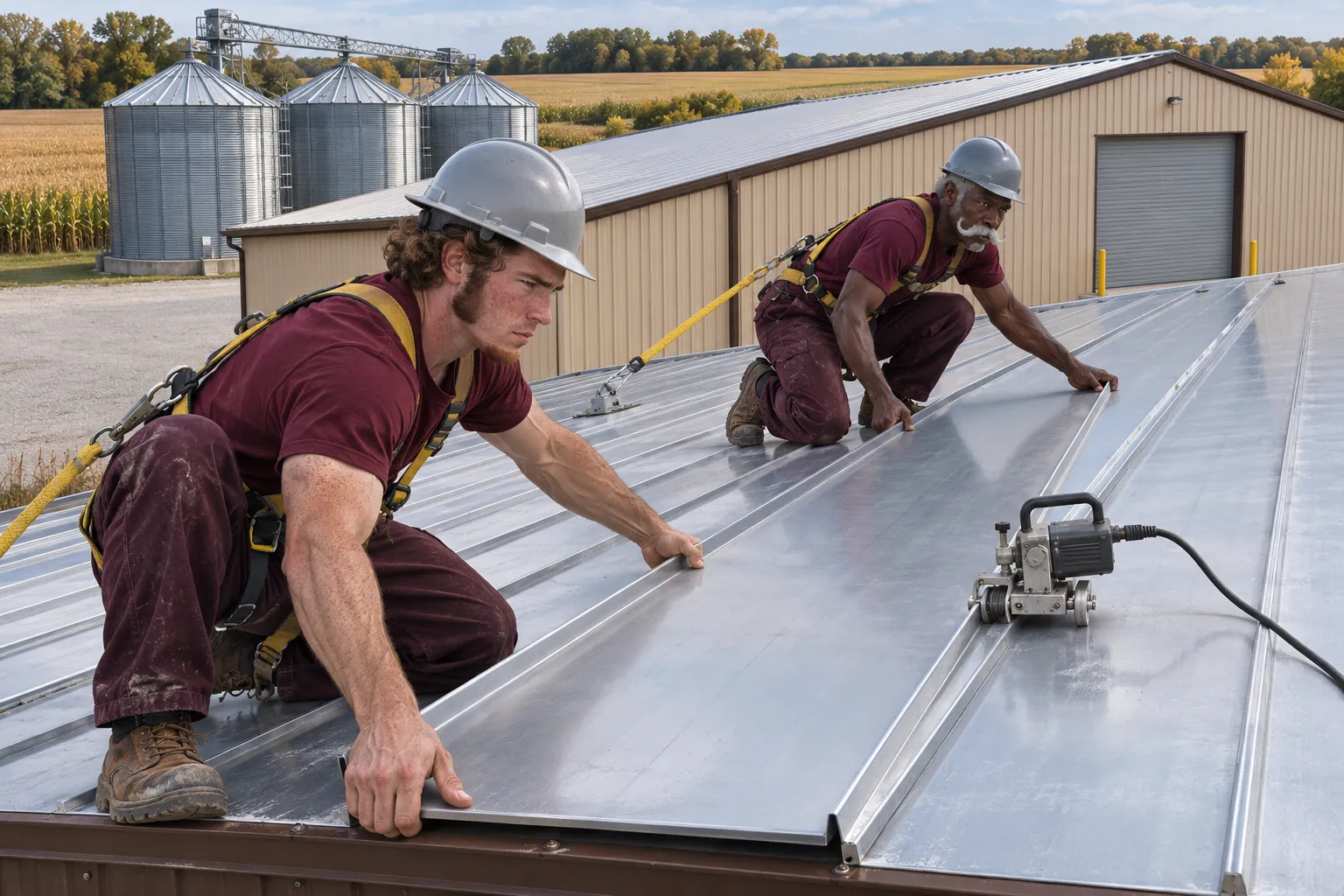 Standing Seams
Sheds, storage buildings, and pitched additions on plant property take metal panels.
It covers the large low-slope roofs of plants and processing buildings, where equipment, exhaust, and heat stress the roof more than usual.
On a food plant it also means working around clean rooms, fresh-air intakes, and grease or steam exhaust that softens some membranes.
Each curb, duct, and support gets flashed into the field sheet, and curbs are raised when new insulation makes them too short.
Walkway pads mark the routes to units that need service, and exhaust and makeup air shutdowns are timed so presses and lines keep running.
A roof survey, cores, and a section plan built around production come first.
Then each day’s section is torn off, the deck repaired, and insulation and the new system installed and sealed before crews leave. Curbs, drains, and edges get new flashings as each section closes.
Expect a written safety plan for working near running equipment and a schedule built around your shifts.
Ask how product and machinery below will be protected, how rooftop units will be handled, and how you will hear what was opened and closed each day.
Yes, on the wrong membrane. Grease and some process chemicals soften certain sheets near the fan.
We list what each stack vents and use a membrane rated for it in that area, tied into the main field.

Send the plant address and your shift pattern. We survey the equipment, cut cores, and plan sections around production.